Pointless Arguments With Pointless Academics

I’m having a quiet week. In theory spending my time doing physical labour in the garden, but in practice looking for excuses not to. Enter an academic Twitter troll. Perfect.

The resulting correspondence is too boring to repeat here, but, needless to say, it was prompted by me prodding at academics doing pointless research.

The UK is still somewhat reeling from the pre-Brexit Referendum that people have had enough of experts. Which means this is a particularly testing time to be an expert. The answer to the contradiction – ‘we want experts and we don’t want experts’ – include, a) a recognition that not listening to experts anymore is not to be equated to a demand for blind ignorance (as we are seeing three years into the still-not-over Brexit debacle), and b) that our definition of experts needs to be updated.

The large majority of so-called experts, and nearly all experts of the academic persuasion, are specialists. They have lots of vertical knowledge, and, too often, not enough horizontal, inter-disciplinary knowledge. In a world as complex as the one we now all inhabit, this lack of horizontal knowledge becomes a bigger and bigger problem. In complex systems, its not so much the ‘things’ that are important as the relationships ‘between’ the things.

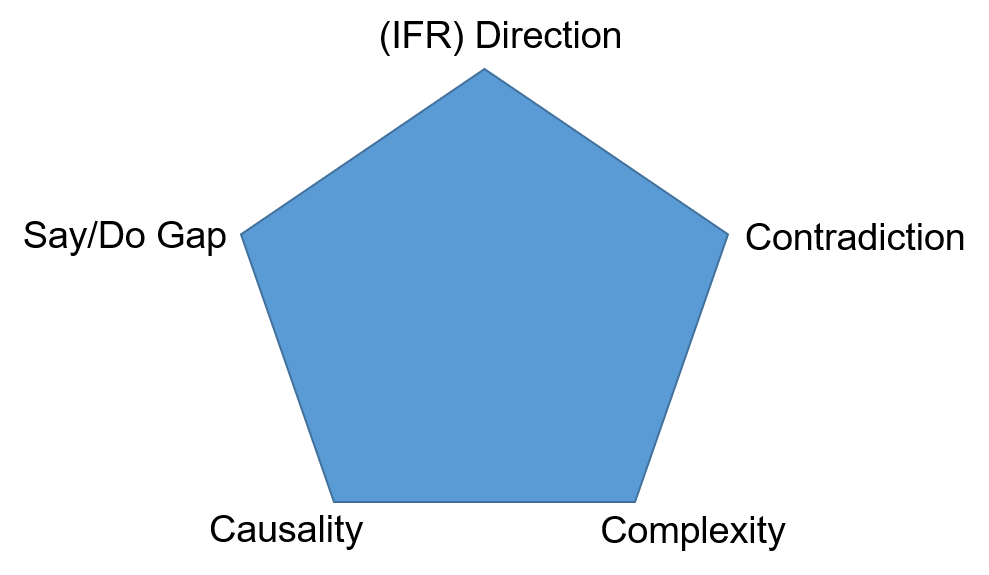
What we know from the last twenty years of our innovation research is that 98% of innovation attempts fail. Ten million case-studies into the subject, we now know some of the core characteristics of the 2% that were successful that were not present in the 98% of prospective innovators that failed.

The 2%:
– Had a clear (Ideal Final Result oriented) direction
– Understood the importance of revealing causal (as opposed to merely correlated) relationships
– Understood the importance of revealing and resolving conflicts and contradictions to eliminate trade-offs
– Understood the characteristics of complex adaptive systems
– Understood the often considerable gap between what customers say they want and what they subsequently spent their money on
‘Research’ may be seen to have a variety of different purposes, but in almost all cases, the work being undertaken is a precursor to some form of innovation. We research to enable innovation.
If we accept that to be the case, then the above five Innovation ‘DNA’ strands also extend to the world of research.

A big part of our ongoing Systematic Innovation research involves trawling the various worlds of human endeavour. Our biggest source of data still comes from the global patent databases. The second biggest is the academic literature.

Taking on the job of sifting through all of this apparent ‘knowledge’ with the limited resources available to us very swiftly forced us to develop heuristics that allowed us to find what we now know to be the relatively rare needles in the global knowledge haystack. It was the imperative to solve that contradiction that enabled us to reveal the innovation DNA. Now we know it, it enables us to eliminate about 85% of the patents that are granted (97% will never make any money, but a somewhat bigger percentage have some contriadiction-solving merit worthy of sharing with others). As far as academia is concerned, it allows us to eliminate around about 98% of all of the academic literature.

On one hand the lack of relevance of the vast majority of academic output makes our job rather easy. On the other, from a value-for-money perspective it is, I think, a fairly damning indictment of the current academic system. Academia used to be the place to go if a person wanted to work at the frontiers of mankind’s understanding of the world. But once the world started evolving faster than academics and their desire to do everything in PhD-size three-year chunks, then a problem began to arise. The problem was especially great if you were a person tasked with innovating. And so, as is always the case, necessity is the mother of invention. When those tasked with innovating got no joy from academia, they went off and did things themselves. And it turns out that enough of the armies of trial-and-error amateurs, flaneurs, sceptics, and frustrated, pig-headed ornery souls succeed to now make a literal and practical mockery of the academic world.

What I failed to get through to my temporary academic-troll was that this doesn’t mean that doing research is a waste of time or money. There have been enough of the flaneurs now to reveal the innovation DNA. Now we know it, it ought to be incumbent on any ‘expert’ working in the research and innovation domains to make use of it. Which means designing research using the DNA. Or designing research that challenges that DNA and seeks to deepen our collective first-principle understanding of the world.

It does not mean wasting precous resources doing research that doesn’t have a meaningful direction, doesn’t actively seek causal relationships, doesn’t look for or resolve contradictions, fails to embrace the complexities of the world, or fails to recognise that customers (and that includes academics) do things for two reasons – a good one and a real one. Academics, for the most part, it seems, understand the ‘good’ part, but are still for the most part it seems utterly clueless on the ‘real’ bit.
Prove It…

For the last twelve months I’ve picked up a new hobby: thinking about some of the ‘big’ problems that none of our clients ever ask us to work on. High on my list has been to try and understand why most bee populations are in decline.

It didn’t take long for the investigation to reach ‘The Feminization of Nature’ a book published in 1997 and focusing primarily on the feminization of humankind. Over the course of the last 60 years, the book reports on massive drops in male fertility and corresponding massive increases in breast, testicular and prostate cancers. Its one of those doomsday books that, for some reason, the public at large has chosen to bury.

A big clue to the potential reason why this might be the case comes in the last chapter, which focuses on how ‘industry’ was doing its best to challenge and invalidate the evidence. Specifically, the chemical industry. And even more specifically that part of the industry making chemicals with ‘endocrine disrupting’ or oestrogenic properties (mainly pesticides, but also several plastics).

Taken at face value this chapter represents an iconic example of ‘It Is Difficult to Get a Man to Understand Something When His Salary Depends Upon His Not Understanding It’ operating at a whole-industry level.

What this has meant in the case of the feminization of nature is that every piece of experimental evidence obtained by those outside the industry gets countered by those operating within the industry. The easiest way to counter such experiments is to say that they don’t ‘prove’ anything. Closely followed by setting up a different experiment to demonstrate the opposite result.

And herein lies the real problem. If the problem being tackled is a complex one – as is the case with the feminization of nature – there will never be such a thing as ‘proof’.

The more complex the problem, the further from provability things get. One of the biggest drivers of complexity in this regard are the time-lags between cause and effect. Some of the causal loops in The Feminization Of Nature are measurable in decades: a woman ingests traces of a particular oestrogenic chemical during pregnancy, and her offspring develop testicular cancer when they hit puberty. Or how about the causal link between another mild oestrogenic chemical and breast cancer that affects Caucasian and black women, but only affects Japanese women after their families have lived in the West for two generations. If the consequence doesn’t get manifest for forty years, then we really ought to be teaching scientists a different set of tools and methods to the ones they’re taught today.

Unfortunately (‘for the world’ in this case), the vast majority of scientists and, as far as I can see, every regulator on the planet doesn’t understand complex systems and can’t, therefore, begin to fathom how to design solutions that are safe in complex environments. This allows whole industries to – quite literally in the case of oestrogenic chemicals – get away with murder.

Without wishing to sound melodramatic, not doing anything about the fall of bee populations (or the decline in human fertility, or climate change) until we have ‘proof’ is the same as signing their (and our) collective death warrant.

In the twenty-two years since the publication of The Feminization of Nature, my investigation went on to find, it seems like almost nothing has happened. Lots more experiments, and lots more counter-argument, but essentially all a way to look busy while all the time the problem continues to get worse. Quite literally fiddling while Rome burns. Scientists trying to tackle a complex problem looking for something that doesn’t exist using tools and methods that are wholly inappropriate.

We can never ‘prove’ that oestrogenic chemicals are causing the decline in bee populations in the same way that we can never prove that smoking causes lung cancer.

What is required instead is a way of thinking that acknowledges the complexity, stops looking for ‘root causes’ (there aren’t any in a complex system), stops looking for ‘proof’ (ditto) and instead starts mapping the ‘conspiracy of causes’ and ‘systems’ from which the unfortunate symptoms emerge.

That’s what ultimately happened to the tobacco industry, despite their decades of kicking and screaming protest. There are myriad factors that causally-connect to produce lung cancer, and we know one of them is the smoking of tobacco. Having established that, it is incumbent upon legislators and producers to work to reduce the smoking of tobacco. And to keep doing so for as long as the causal link continues to exist.

Likewise, there are a myriad causally-connected factors that collectively conspire to affect bee populations and human fertility and hedgehogs too, as it happens. In all three cases, one of those causally-connected factors is the release of oestrogenic chemicals into the environment. And because that is so, it ought to be incumbent upon those operating in the domain to a) start building better and progressively more refined conspiracy-of-causes systems maps in order to begin to understand the impact of whatever changes they are thinking of trying, and, b) most importantly of all, work diligently to reduce the release of oestrogenic chemicals into the environment, and to keep doing so for as long as the causal links continue to exist.

What Is Design #24

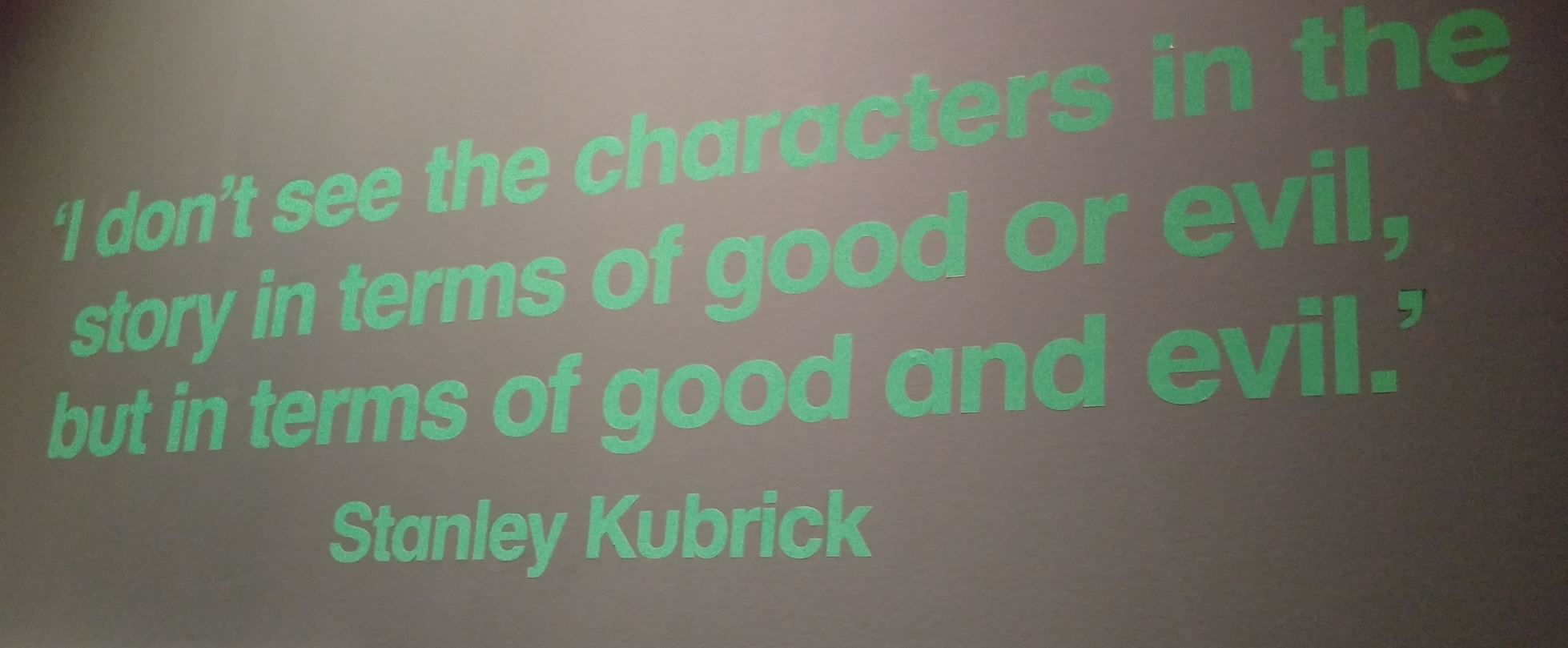
I spent most of Saturday afternoon at the Design Museum in London. Three-quarters of the visit was awe-inspiring and quite brilliant. The other quarter was depressing. The three-quarters part was the Stanley Kubrick exhibition, which I would heartily recommend anyone takes a few hours to go visit should it visit a town near you. Or even not near you.

The other quarter was everything else in the Design Museum. Before Saturday, I thought the best way to make myself angry was to spend time at academic conferences. Now I know it is visiting the Design Museum. In fairness to other design museums, specifically, the London version. The one in Copenhagen, by contrast, I thought was full of ideas. Well, I suppose the London version was full of ideas too. But whereas I left the Copenhagen museum with a notebook full of good ideas, my notes from London were pretty much all about how idiotic most ‘designers’ are.

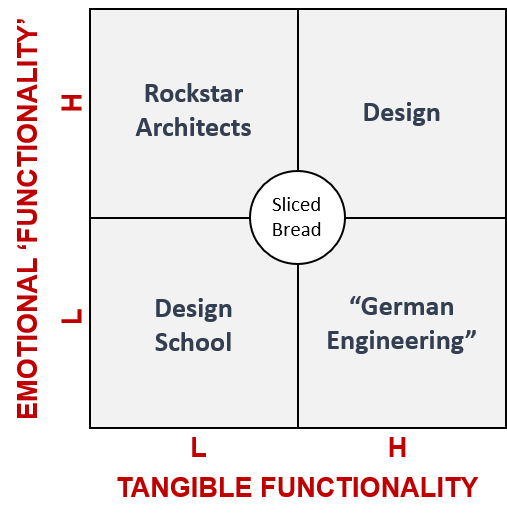
I’m guessing a big part of the problem is curation. The curators at Copenhagen seemed to have a very clear grasp about what design is. After my visit there, I drew this:

Everything I saw in London was built on the assumption that the feel/function relationship is some kind of an ongoing either/or debate. Here’s a room full of random stuff that was very functional. And over here is another room, this time full of random stuff that looks pretty. The end result being that it all looked like a collection of random stuff that only by accident ever achieved ‘both’.

The confusion extended, too, to the design of the Museum itself. I’m guessing that whoever got the commission for the building and its fixtures and fittings was setting themselves up for a fall no matter how good a job they did. Designers can be spitefully cruel critics. I can empathise with that. I’d have to say that the aesthetic end of the either/or spectrum would probably be happiest as they walked around the London Design Museum. How that bias was allowed to continue into the rest-rooms, however is beyond me. Yes, they look pretty, but if there’s one place functionality is important, it’s a rest-room. Having to put up signs informing users how to wash their hands is a good indication the sink design is functionally rubbish.

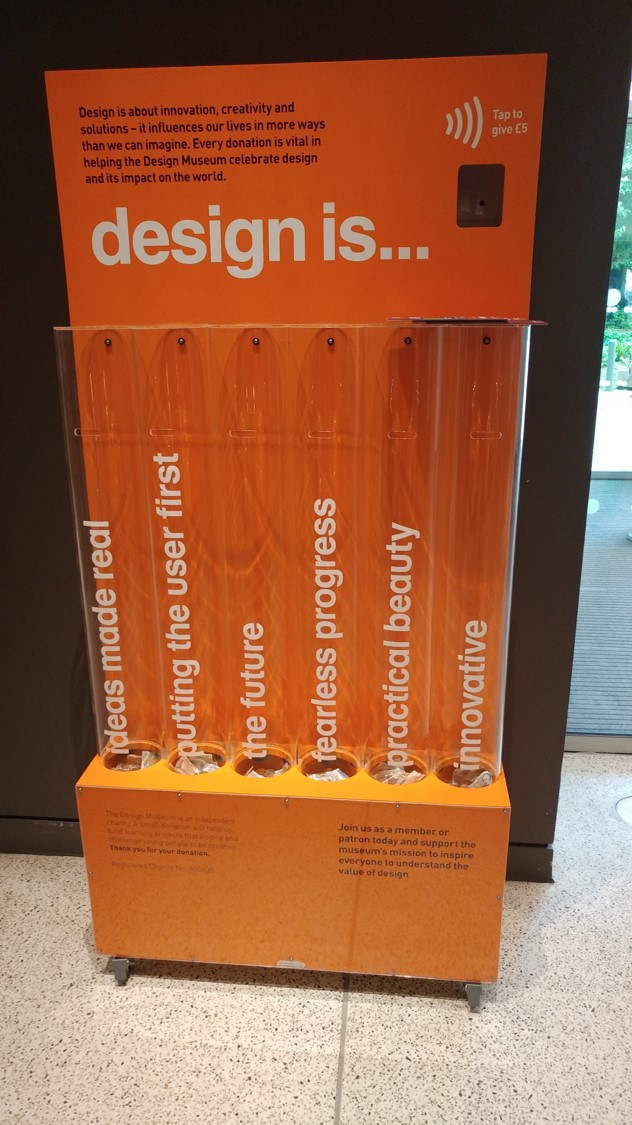
The crowning example of how the London museum curators don’t understand ‘design’, however, hits you the moment you enter the building. You see this monstrosity:

It’s tangible aim, I guess, is to get people to donate money to the museum in a way that is – in theory – informative, and – bit more of a stretch – encourages some kind of thought process to take place. Is design ‘ideas made real’? Or ‘putting the future first’? Or ‘fearless progress’? Or… well, you get the idea. The key one being the implied word ‘or’. The moment we force people into either/or decisions we’ve just asked them to answer the wrong question. All we’re going to learn when we ask these questions is how to optimize the annoying compromises we’re about to ask our customers to make. And that, as Stanley Kubrick will tell you, has nothing to do with design at all…

The Wrong Kind Of Temperature?

Parts of the UK had their hottest July temperature ever this week. One or two spots had their hottest day ever. By about 0.2 degC. You could spot the hottest places by the train system chaos the extra 0.2degC created.

In recent years, the ill-starred British commuter has had to put up with a number of things. First we had the wrong kind of snow. Then we had leaves on the line. Now we’ve got sagging overhead power lines and buckling track.

Metal things expand when they gets hot. I get that. I learned about it in my first-year engineering degree. No, scratch that, I first learned about it in Physics class when I was about 11. What I learned in the first-year of my degree was how to design structures that were able to handle changing temperatures.

What I was taught was this. One, establish how big the range of temperatures might be. Two, add some safety margin. Three, work out the mean and median temperatures and use these as your ‘design point’. Four, once you’ve created the basic ‘average’ condition state, build in appropriate tolerances and make sure that the system still operates safely at the edge of these tolerances. And, if it can’t, put in place measures that prevent people operating the system outside the safe limits.

So, on one level, you’ve got to have some sympathy with the railway engineers in the UK. Some. Not much, but some. Climate change is meaning that highs are getting higher and lows are getting lower. The only thing we might fault them on here is their over-eagerness in Step Two above to minimise safety margins. No doubt because, the engineering college notes will tell you that more safety margin means adding more material, and that in turn means the system gets more expensive. I get that too.

The real problem here are the academics that taught those engineering design courses. People who, for the most part, don’t understand Ashby’s Law. Only variety can absorb variety. Which, in terms of designing rail track and overhead power cables means that if there is variation in the environment in which the design has to operate, there needs to be an equivalent amount of variability in the design to be able to cope with it. Taking a stance that says the designer should design for a so-called ‘optimum’ middle-ground design point, and then prevent the system from working outside the range of environmental variation, does not obey Ashby’s Law. What it does is mean that millions of commuters have a miserable journey home on very hot days.

The deeper problem here, however, is that not only do the academics not understand Ashby’s Law, they also have a virulent allergic reaction to TRIZ. Probably because they never learned about it in the first-year college notes they took when they were being taught engineering design. I can’t blame them for that. But I can – and do – blame them for not being willing to listen now that the world does know about it.

What TRIZ tells us is that variety in operating conditions very likely creates a contradiction: we want the overhead power lines to be the right length when the weather is hot, and we also want it to be the right length when the weather is cold. Or, better yet, if we think in terms of something else TRIZ tells us – ‘the customer wants the function‘ – we want power to be successfully transferred from the grid to the train when the weather is hot and cold.

Once we’ve found the contradiction, guaranteed someone, somewhere has already solved it. There are dozens of smart ways to solve the contradiction. Ditto when we then hit the next inevitable contradiction (probably cost-related). The real problem here is no-one has been looking for contradictions. And no-one has been looking for them, because no-one taught them they were a valid thing to go look for.

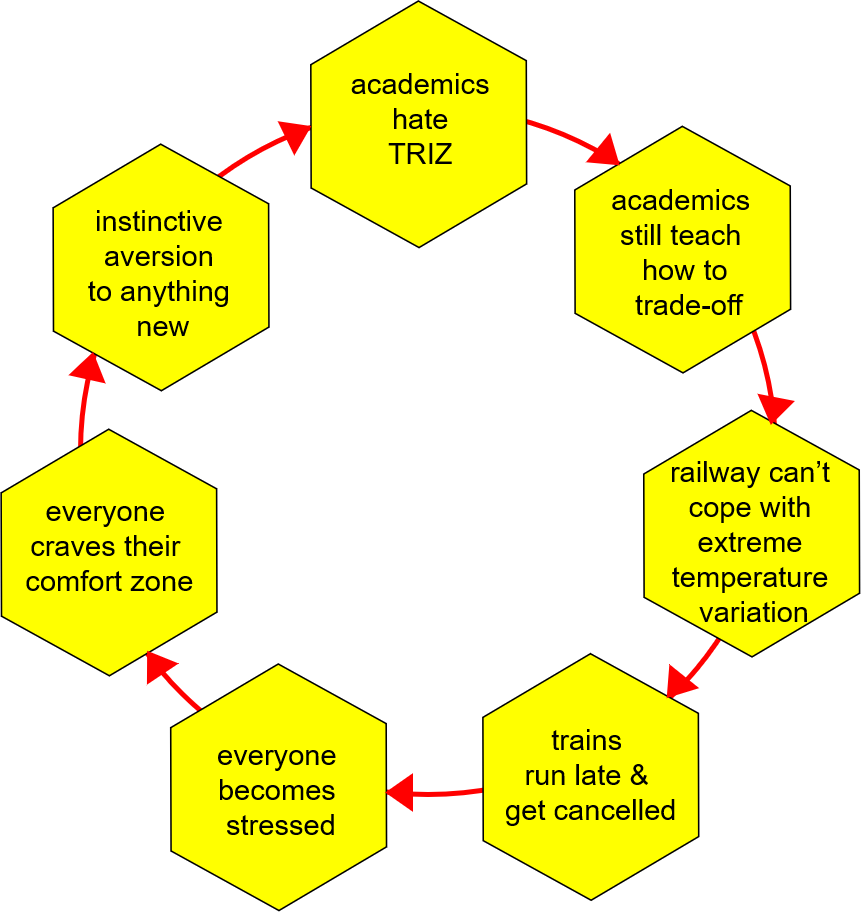
Which in turn means society has a complex problem to solve. Which then means that there is no ‘root-cause’ (another academic failing!). Which means we need to go look for ‘conspiracies of causes. Which, finally, with tongue slightly in cheek, tells us the vicious cycle that needs to be broken in order to create a railway system that works whatever the weather pretty much comes down to this…

Negotiation Step-Changes

Life is negotiation. It is about what we ‘want’. And about other parties that want something different. Ultimately, therefore, negotiation is about contradictions.

I’ve spent quite a bit of time over the course of the last three years thinking about negotiation. Probably in no small part because it feels like I’ve spent the majority of this time watching the still-spiralling out of control debacle that is Brexit. The rising sense of horror that no-one in the negotiation – on either side – appears to be armed with even a modicum of creativity. Admittedly, of course, the EU side of the negotiation, having the upper hand throughout, haven’t had to be too creative, but even so, in public they have always talked about matters in terms of lose-lose, and how their primary job has been to minimise the losses on the EU side.

On the UK side, cemented by the Panorama documentary last night, the negotiating skills come across as misguided at best, and pitiful at their very frequent worst.

Ultimately, I’ve been left with the question, does no-one know how to negotiate any more?

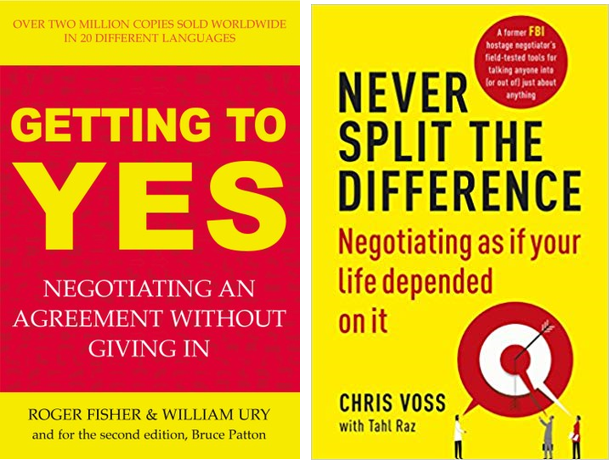
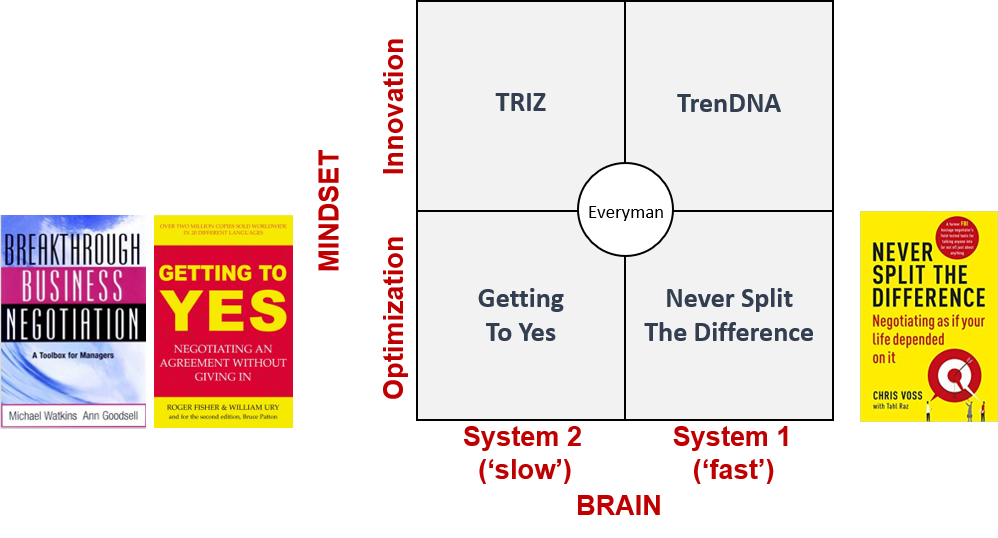
Last week I started reading Chris Voss’s book, ‘Never Split The Difference’. And unusually for any kind of book I read these days, it gave me an ‘aha’ moment. Voss’s book represents something of a step-change in the world of negotiation. All of the negotiation ‘classics’ prior to his book – think all-time classic ‘Getting To Yes’ by Ury & Fisher – are built on the premise that the parties involved in a negotiation are thinking rationally, and that negotiation therefore ultimately comes down to ‘problem-solving’. Voss’s innovation is an acknowledgement that negotiations are instead dominated by our ‘system 1’ emotional brain. People negotiate for two reasons, a good reason and a real reason, to paraphrase an aphorism we use a lot in Systematic Innovation world.

Voss’s book ultimately comes down to recognising the importance of our ABC-M model when it comes to thinking about what each party in a negotiation is looking to achieve. Its one of those blinding flashes of the obvious that has somehow taken fifty years, and Voss’s multi-decade career in the FBI to reveal.

It was inspiring to realise that ABC-M has been validated as a negotiating technique (‘someone, somewhere already solved your problem’), but more importantly it triggered another blinding flash of the obvious in my head.

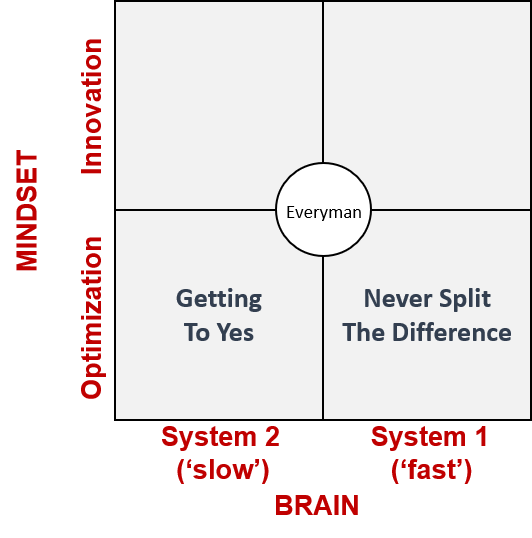
That flash started when I started to draw this 2×2 negotiation matrix:

Chris Voss made a jump into the ‘system 1’ emotional quadrant, but ultimately the solution strategies he ends up using once the other negotiating party has succumbed to Voss’s emotional ju-jitsu were still very much of the zero-sum, trade-off kind. Voss wins, you lose.

Which, I guess isn’t so bad if the person on the other side of the negotiation is a hostage-taking bank robber, but for something like Brexit, it can still only produce lose-lose or win-lose outcomes. No-one is going to come away from the negotiation having their cake and also eating it.

The only way to do that is to switch from an ‘optimization’ mindset to an innovation mindset. Negotiations are ultimately about contradictions, but truly resolving them – to deliver win-win – only happens when the contradiction is genuinely solved rather than assuming the answer inherently involves some kind of a trade-off. In this way, I’m pretty certain the next step-change in the shady, dysfunctional world of negotiation will be all about embracing the principles of TRIZ. And, if we acknowledge Voss’s findings, our TrenDNA research:

I think I can feel another book coming on…


You Say Tomayto, I Say Vector

I know it’s difficult, but the TRIZ community really needs to stop indulging in fatuous either/or arguments. Admittedly, sometimes its not always clear that’s what we’re doing. But if attendees at the 10th International Conference on Systematic Innovation last week spent half the conference falling in to the either/or trap, what chance do we have of making progress with the wider innovation community?

One paper at the conference was a call for accuracy in the various definitions of the TRIZ Ideality equation. Of which there are quite a lot. Here are a few of them:

1. Ideality = Sum Useful Effect / Sum Harmful Effects
2. Ideality = Sum(Useful Functions)/ Sum(Harmful Functions)
3. Ideality = Sum (Benefits)/ (Sum(Expenses)+ Sum (Harms))
4. Ideality = (Perceived){Benefits/(Cost+Harm)}
5. Ideality = Performance – (Harm + Interface + Cost)

If nothing else, there’s certainly plenty of scope for arguing which might be better or worse than another. The last one, for example, taken from patentinspiration.com, is particularly annoying because it fails to acknowledge the importance of measuring ratios when comparing good and bad things. My personal annoyance at this definition, however, is no reason at all to enter into an argument about it. Because it, like any other argument about the other definition differences would be value-less.

Here’s why. We know that ‘increasing ideality’ is one of the TRIZ pillars. That ideality moves in a clear direction tells us it is a vector. A direction of success.

If one person talks about benefits and another mixes benefits up with functions, provided they’re both consistent with the increasing ideality vector, it makes no difference at all that one might be a ‘better’ definition. You say tomayto, I say tomahto.

So when one TRIZ educator describes to their students that what they want to see (referring to a drone case study) is this:

Benefits (Functions) – lift, control, pilot feedback, payload capacity, flight duration, ground speed, acceleration
Cost – purchase, maintenance cost, electricity used, delivery time
Harm – weight, noise, battery disposal, collisions

(incidentally, several of which are neither functions nor benefits) When the student comes back with this –

Benefits (functions) – low weight, low noise, better manoeuvrability, faster delivery
Cost – lower cost than competitors
Harm – reduction in accidents

…that doesn’t make the student wrong. Or it shouldn’t. Everything the student has written down here is completely in line with the important part of the story. And that is that each answer is consistent with the increasing ideality vector. If our solution is lower cost than competitors, are we ‘more ideal’? Yes. If our solution is low weight, is that ‘more ideal’? Yes.

By forcing an unnecessary precision on students, all we end up doing as a community is perpetuating the ridiculousness of yet another either/or argument, and as a result getting further away from what’s important. Our job is to spot the either/or nonsense before we expose it to newcomers. And once we have spotted it, we need to realise our next job is to solve the contradiction and get to a higher level consensus. Arguing about whether ‘low weight’ is a function, a benefit, an outcome or an attribute is utterly futile, and, worse, confuses people about an important issue they very likely already instinctively understood. That ideality increases.

Not Moving Mountains

I think the final straw was being lectured by the editor of an academic journal on how to get a paper accepted in his august publication. It was like being back in a bad re-run of the 1970s. Academia is increasingly no longer fit for purpose. Certainly not when it comes to writing about innovation. Innovation happens elsewhere. And then – maybe – academia comes along and pontificates about what happened later. Academics are increasingly society’s historians.

This is a big pity because the world of innovation needs academia. But innovation means getting things out there, seeing what happened, learning from it, and trying again. No-one builds billion-dollar new products and services in one iteration. And it certainly doesn’t wait a year for referees to deliberate about the validity or otherwise about the latest iteration in the inherently complex innovation journey.

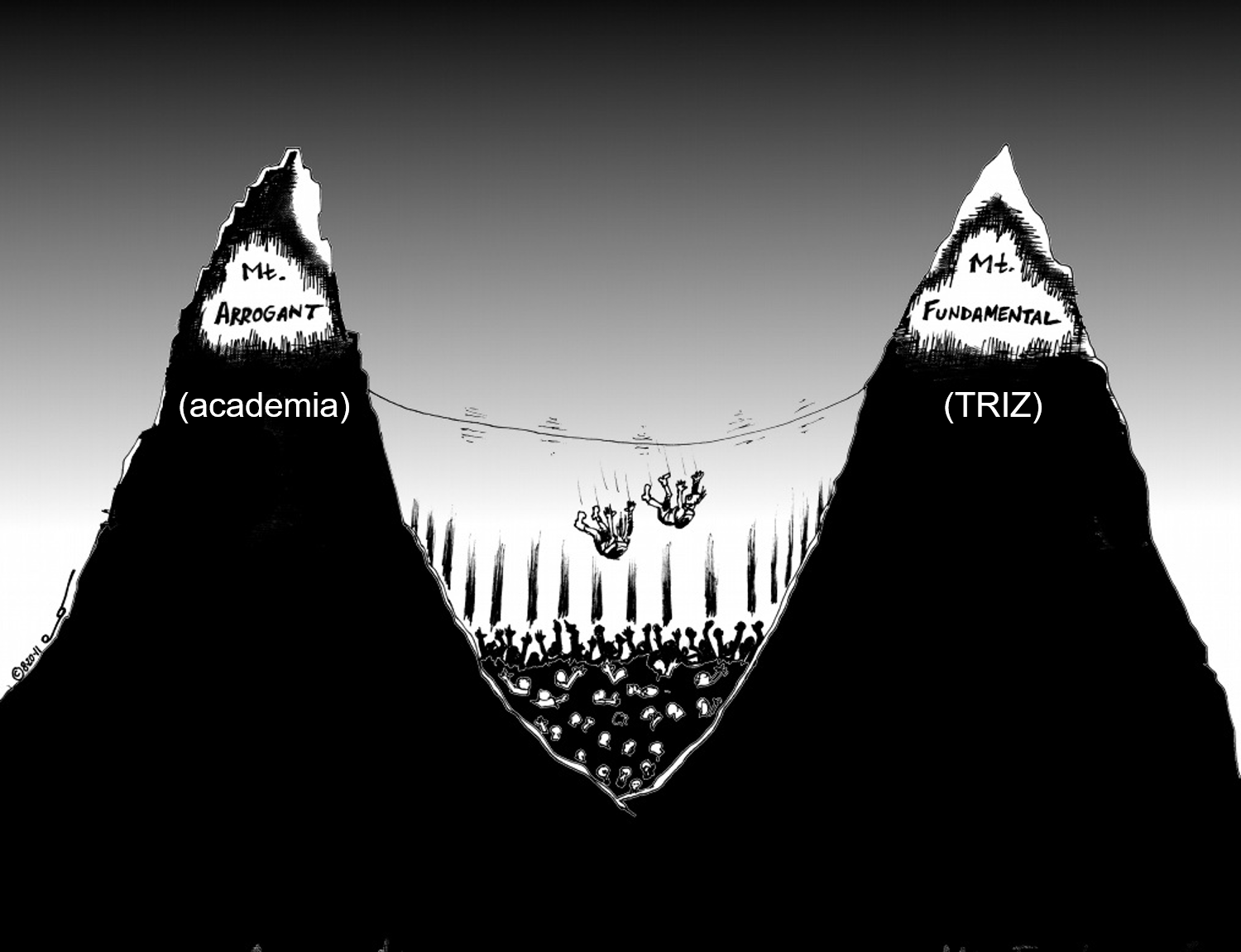
Worse still is TRIZ’s relationship to academia. Thanks to an accident of history, the original TRIZ research was not conducted by traditional academics. As TRIZ grew, it grew a completely separate mountain of knowledge. Which is a problem for TRIZ-sympathetic academics. The academic world works largely on citations. And so if an author isn’t able to cite something in the traditional academic world, it is highly likely their paper is going to be rejected by the traditional academic world. And there lies the rub. There’s barely anything in the traditional academic world’s mountain of knowledge that is of any significant value once a person knows TRIZ.

The TRIZ research has always been about distilling the world down to ‘first principles’. Which essentially means removing all of the failed innovation attempt noise and focusing instead on the signal coming from the 2% of attempts that ended successfully. Put more starkly, the tRIZ research tells us that 98% of traditional academic output is noise.

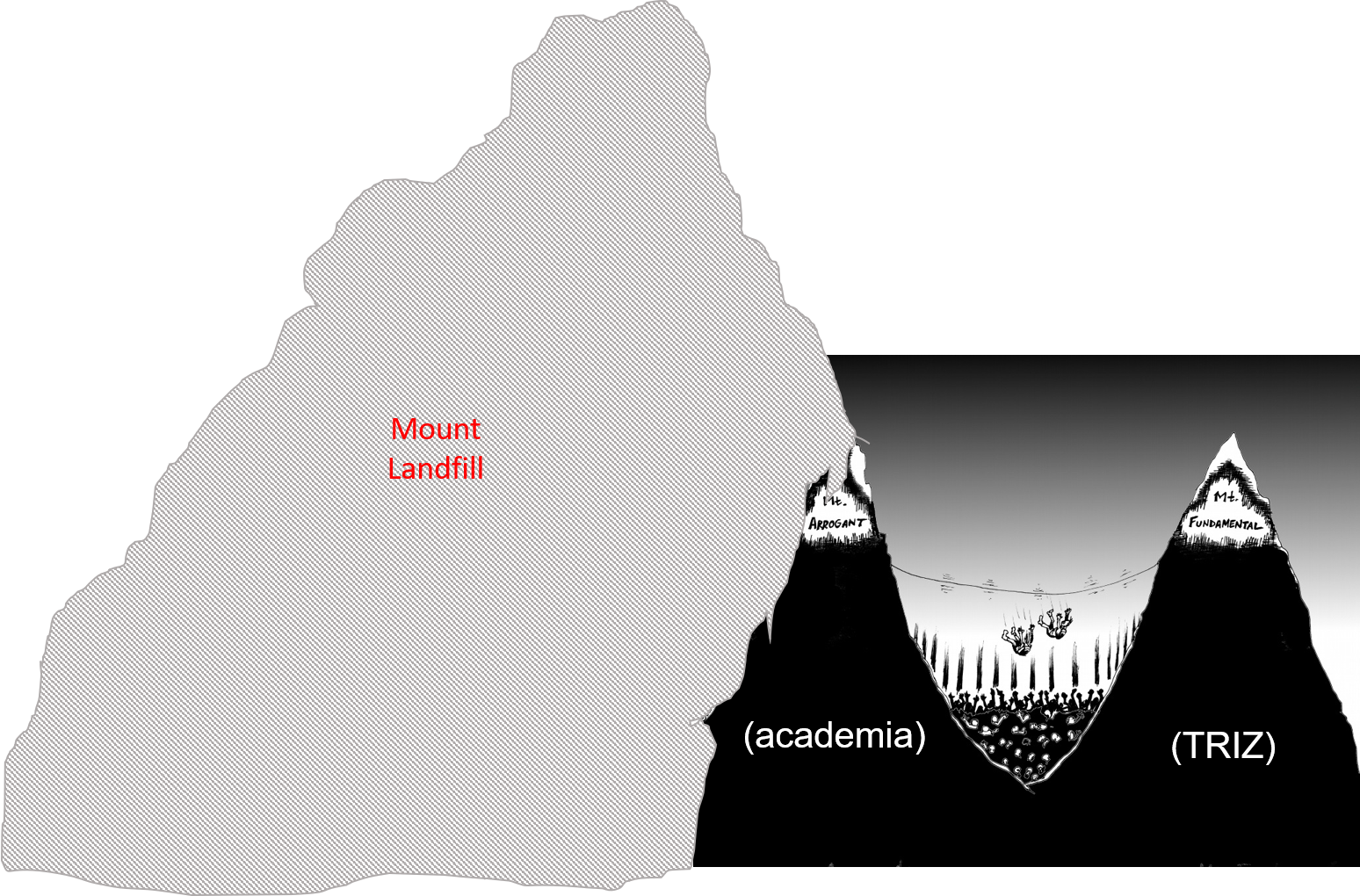
I often find myself showing the ‘two mountains’ graphic to try and explain the fundamental problem that the academic world has found itself embroiled in. Some – usually traditional academics – can’t comprehend how the two mountains are the same height. This is why I tend to label their mountain, ‘Mount Arrogant’, but, in fairness to them, I can see why they might be offended by the idea that a bunch or Soviet engineers might have accidentally uncovered what we now know to be fundamental truths about how the world works. In theory the academic world is all about ‘evidence-based’ knowledge acquisition. In practice, unfortunately, it is instead about Confirmation Bias and Wilful Blindness. Time and time again, TRIZ findings will tell a traditional researcher (or – worse – thir supervisor) that what they’re doing is dumb. Or has already been done by someone else. Or is looking in the wrong direction. No-one likes news like that. I get it.

That emotional trauma, however, can’t be allowed to alter the fact that the vast majority of the mountain of knowledge built by the traditional academic world isn’t knowledge at all. It is instead largely the science of trade-off and compromise, the science of being stuck inside a silo and failing to make connections to research in other domains, and the science of ill-founded hypotheses. If we include all of these scientific mis-steps, then sure, the traditional academic mountain might look enormous. But once we look more closely – through a TRIZ lens – the large majority of that mountain is mere landfill.

This is a problem for the traditional academic world. But it is ultimately also an enormous problem for the TRIZ world. A world that needs to build bridges between the two mountains. And do so even though the people on the other mountain are more often than not busy cutting the ropes.

As the political world is increasingly demonstrating, people have indeed ‘had enough of experts’. But the world is also beginning to wake up to the thought that while ‘blind ignorance’, Fake News and ‘my-opinion-beats-your-fact’ memes might be alternatives, they definitely don’t improve matters.

The world needs academia, just not the one we currently have. Academia needs to wake up. The revolution is here. Three-year PhD cycles, two-year editorial procrastination cycles no longer make any kind of sense. Neither does having academics working on trade-off and compromise projects. John Boyd’s OODA loop work tells us the former is wrong; TRIZ tells us the latter is wrong. The academics that learn the fastest are the ones that will prevail.  The world needs one mountain of knowledge not two. The academics that build the bridges are the ones that will prevail.

The Storytelling Tailspin

“Truth is stranger than fiction, but it is because Fiction is obliged to stick to possibilities; Truth isn’t.”
Mark Twain

As with most things in life, a piece of smart thinking quickly becomes corrupted when exposed to and adopted by the masses. The temptation to remove all the difficult bits of that original thinking in order to provide novices with the ‘easy button’ they yearn for inevitably always proves too great in the end.

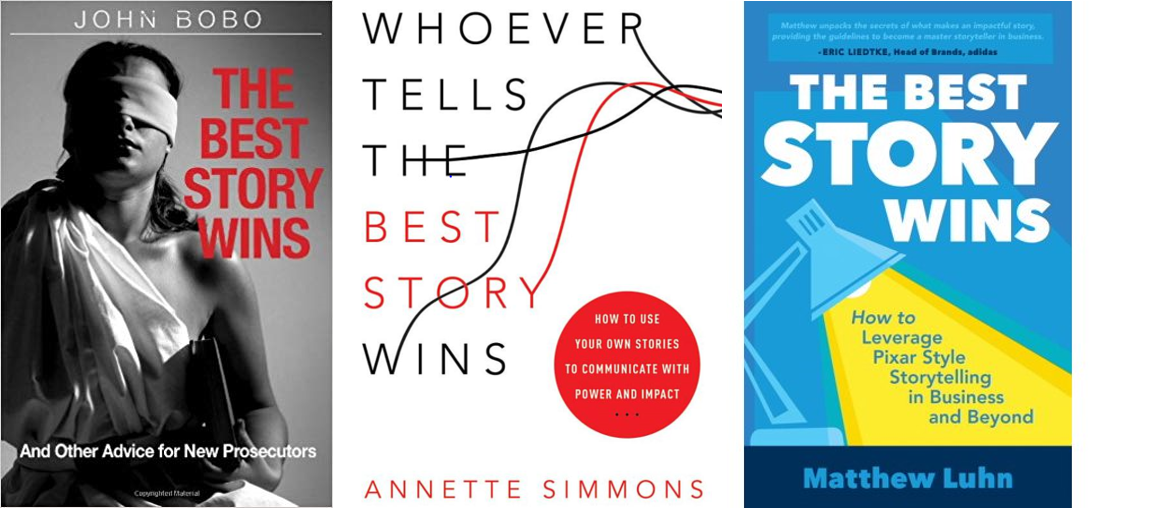
I’m sure Annette Simmons – who’s pretty much devoted her career to the subject – John Bobo, Mathew Luhn and the myriad other authors who’ve tapped in to the same basic idea started out with the best of intentions. Their idea being that good storytelling is an important factor in achieving success in life. The person who tells the best story wins. Story makes the world go around. People do things for a good reason and a real reason. The real reason is the emotional one. And story is the shortcut way to our emotions.

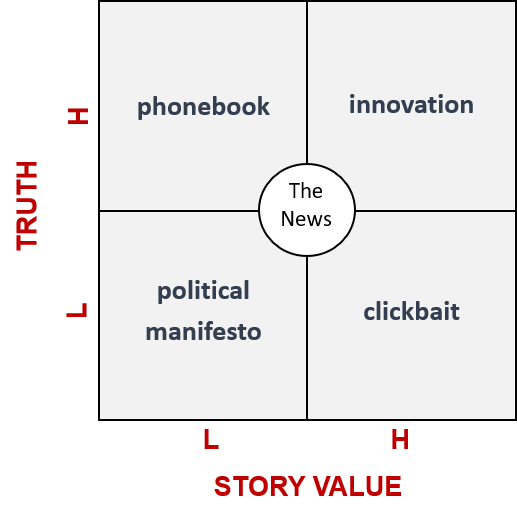
I’m sure the original idea was that we were all supposed to add the story-telling importance meme to the existing idea that success came to those who told the truth. Truth plus story equals innovation.

But, of course, telling the truth is hard. And once people begin to realise that telling a good story, even if it is patently untrue, beats the dry truth seven times out of eight. And so starts a downward spiral that now sees most parts of the world stuck in a Fake News tailspin.

Arch-liar and Conservative politician, Andrea Leadsom, has taken to dismissing the words of experts as ‘just their opinion’, safe in the knowledge that the vast majority of her listeners will simply nod their heads in agreement. Much easier in our busy, over-scheduled lives to do that than think.

That the best story wins irrepsective of truth was made clear through the clickbait- soundbite victory that was the Brexit campaign. ‘Take back control’ makes for a great story. ‘Our Independence Day’ makes for an even greater one. No need to worry about the tiny question-mark of whether they’re true or not. We can all – Brexiteers included – patently see today that both are patent nonsense. But that becomes part of the story, part of Steve Bannon’s masterplan: no-one likes to admit they were wrong. And with that the RomCom devolves into inevitable tragedy.

The Fragile Zone

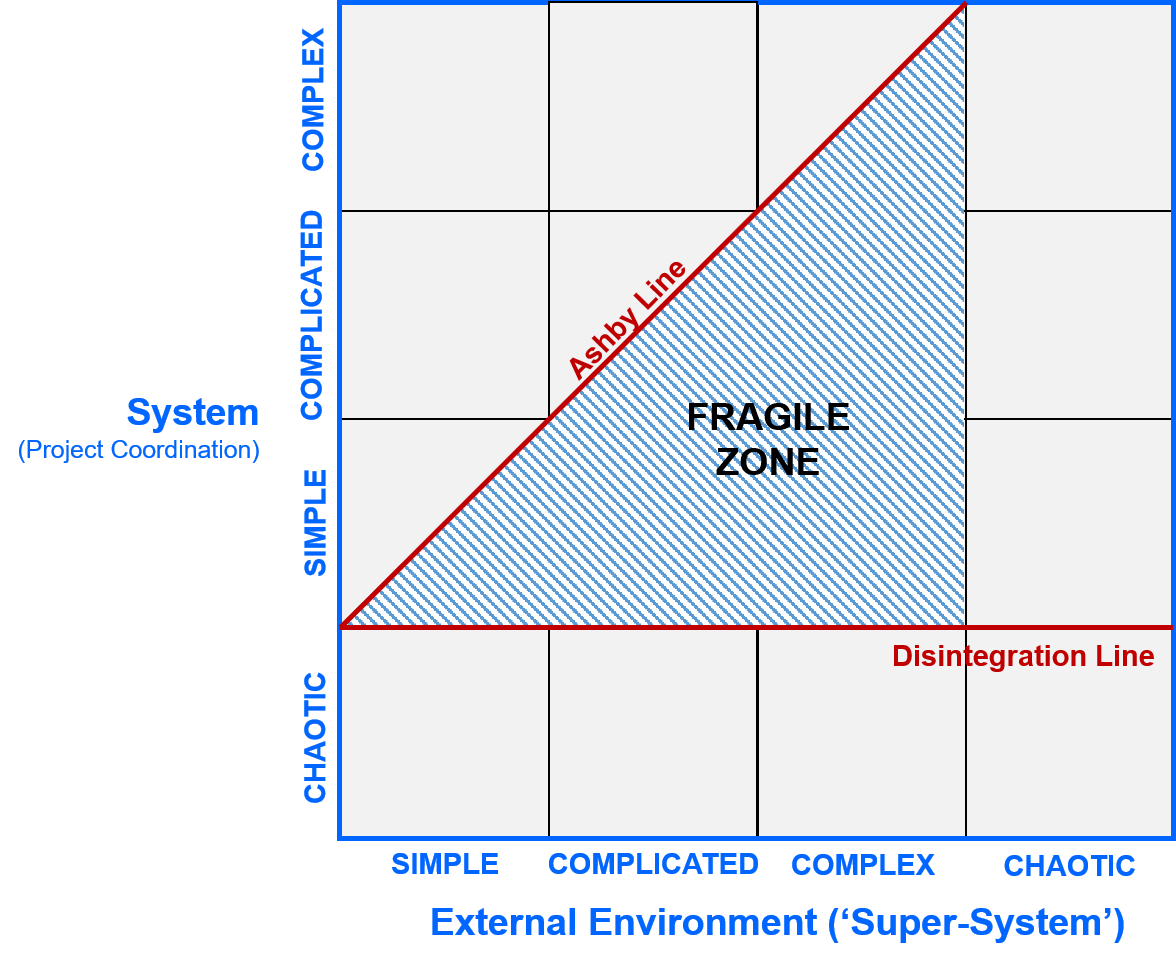
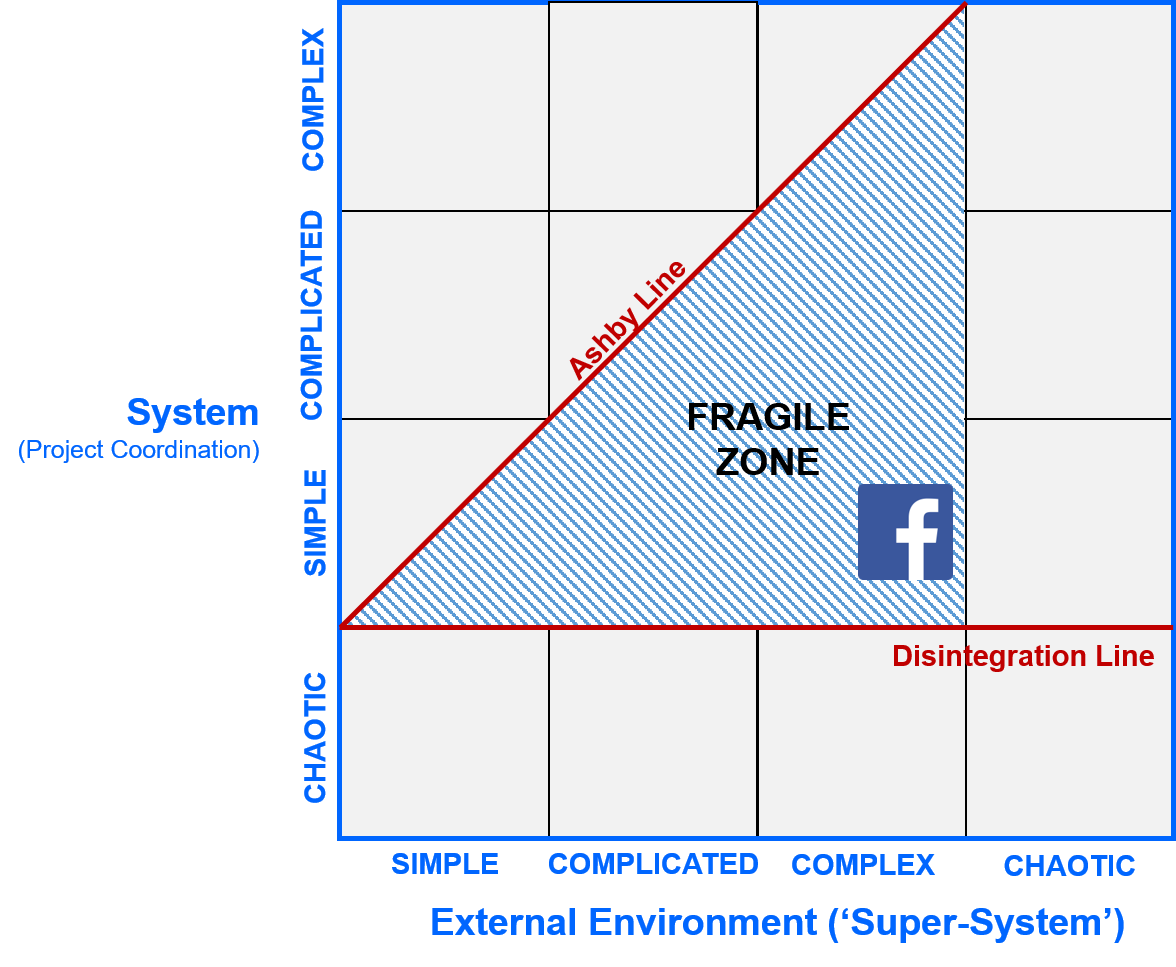
We’re missing one final segment of the Complexity Landscape Model. The Fragile Zone is the space where a system is below the Ashby Line, above the Disintegration Line and the surrounding environment hasn’t reached Chaos. It is the Zone where the Ashby Margin (coming soon – see Systematic Innovation ezine, June issue) is negative. It is the Zone where the ability to change of the system is below the level of change likely to happen. It is the Zone where a majority of the enterprises on the planet typically find themselves. The further along the Operation Excellence road they have travelled, the further they are likely to descend into the Fragile Zone. They might have more money in the bank, but don’t know enough about how and when to invest it.

The fact that a majority of enterprises – commercial, public sector, government, NGO – find themselves in this Zone is because most leaders don’t understand complex systems. And that many of the management strategies relevant in a non-complex world no longer make sense when the world becomes complex.

The fact that they don’t all go out of business is all about the disruption pulse-rate of the domains they operate in. A mining company can afford to be fragile for 30+ years and still survive. A software company can afford to be fragile for about 30 days. Careful with that ‘connecting-the-world’ axe, Facebook.

The Chaos Liftshaft

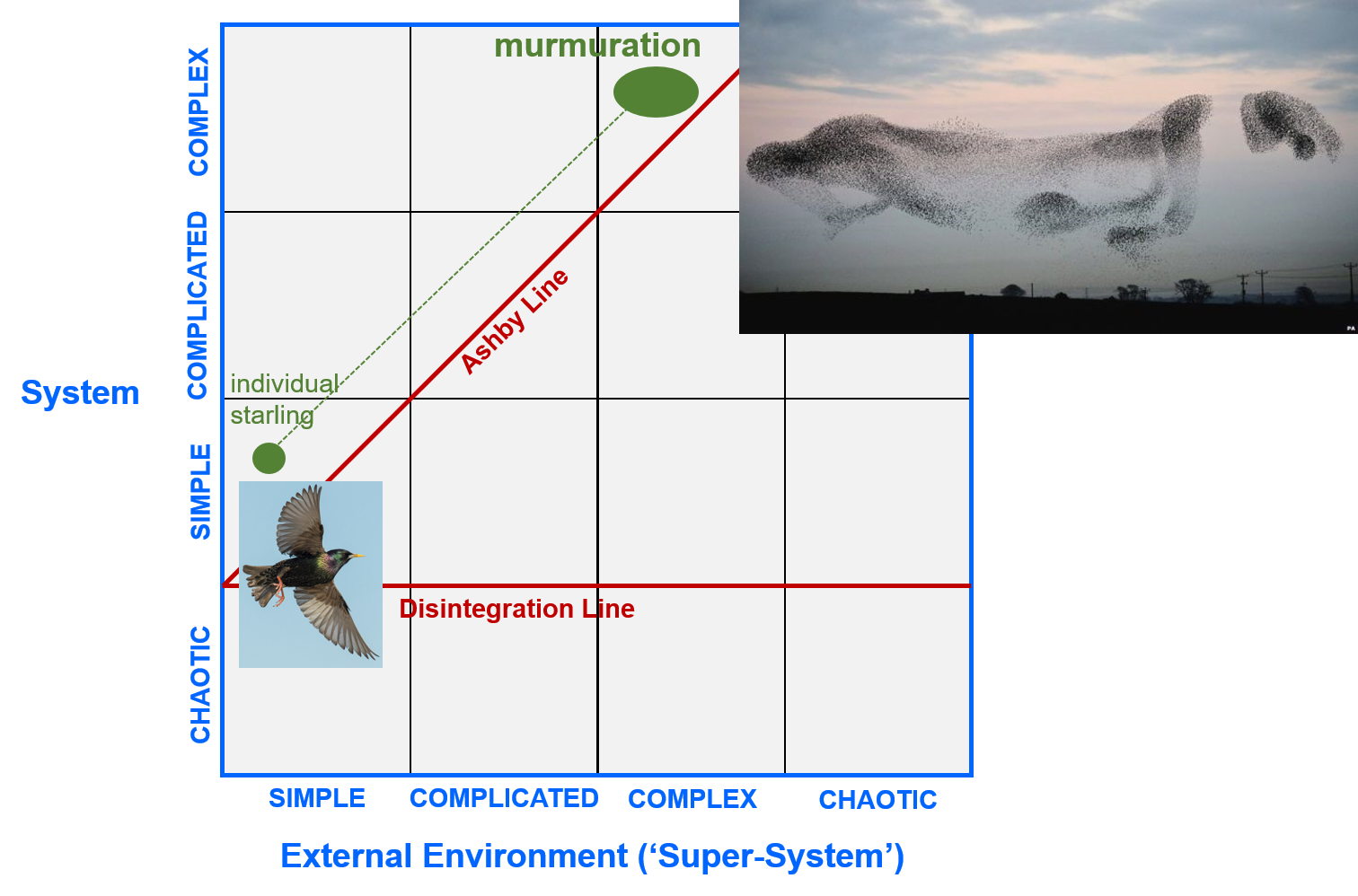
A murmuration of starlings is one of the complex system examples I use a lot in workshops. No starling is in charge and the shape of the formation emerges based on local shifts in the environment: a gust of wind or thermal causes one bird to deviate from its course, which then leads all the birds around it to have to deviate from theirs.

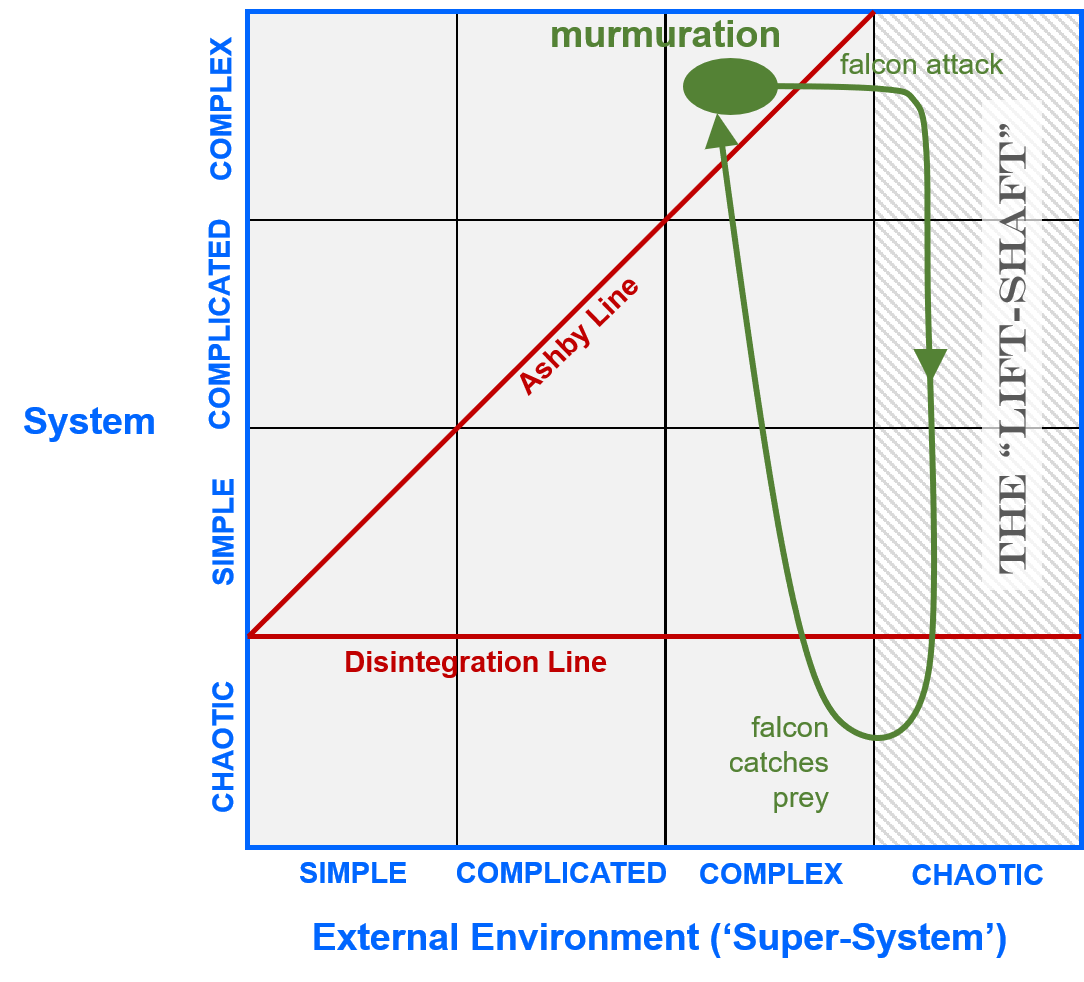
When a bird of prey arrives on the scene, however, as shown in the photo above, complexity quickly devolves into chaos. Now each starling instead of ‘staying as close to their neighbours as possible’ switches to a new rule: ‘get away from the falcon’. And chaos ensues.

For a while at least. Once the falcon has acquired dinner, the rest of the starlings know they’re safe. And so the Chaos can settle down again, back to the original complex system and its emergent patterns.

I thought I’d see what the story looks like when plotted onto the Complexity Landscape Model. I did it from two perspectives – firstly looking at the murmuration as a whole, and second zooming in and looking at one starling. Here’s what I think the two perspective look like prior to the arrival of the falcon: The murmuration as a whole is a complex system operating in a complex (weather-driven) environment, whereas, because each starling is flying to the same basic, simple ‘stay as close to your neighbour…’ instruction, I think we could describe this as simple-simple. Because the formation and each bird is operating stably, I’ve placed both above the Ashby Line:

Now let’s have a look at what happens when the falcon arrives. Let’s look at the whole formation first. The first impact of the falcon’s arrival is that the environment shifts to the right, across the Ashby Line. When the falcon first arrives, the formation doesn’t ‘know’ that the world as changed, but once the first starlings realise there is a new threat, then the formation swiftly devolves into chaos. Not only that, but each starling also quickly realises there’s a problem and the whole system tumbles into the Chaos-Chaos segment of the CLM. This breakdown happens very quickly. So the fall from a complex system to a chaotic one, looking at it on the Landscape, is rather like falling down a lift-shaft.

When the falcon has caught least weakest, most-adjacent starling, the chaotic environment stabilises, and then when the rest of the starlings realise this, the murmuration returns to its previous state.

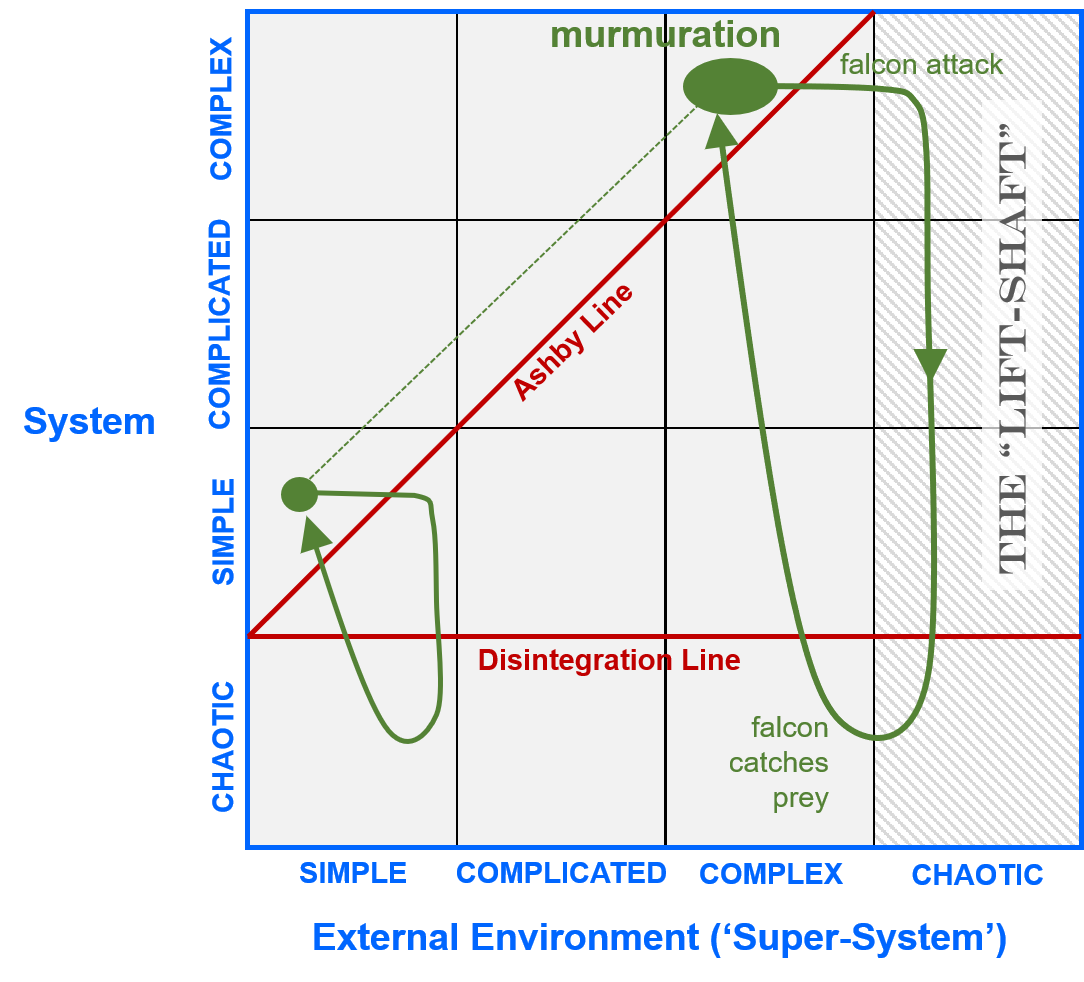
At the level of the individual starling, the ‘environment’ becomes its immediate neighbours rather than the whole murmuration. At this level, the falcon emergency looks more like this:

The ‘lift-shaft’ fall is shorter this time because we’re starting from Simple rather than Complex, but nevertheless, its still a rapid tumble into chaos once the starling realises there’s a problem. I’ve drawn the trajectory such that the individual starling again returns to the same basic start point. If the starling in question is one of the ones that had a lucky escape, however, it may well be that they learn something from the experience and as a result make a subtle shift upwards (‘more resilient) and possibly diagonally to the right. I’m not sure though… I get to see murmurations a lot, and have done for a good number of years and I’ve not seen any evidence at all of starlings evolving to develop better falcon avoidance strategies. By the same token, I’ve witnessed several organisations falling down their own chaos lift-shafts and I haven’t seen much learning from them either. Time will tell.