Suggestion Scheme Suggestions

Most Suggestion Schemes fail. Most fail dismally. The wasted effort is sad. But not nearly so sad as just how predictable the failures are. We’ve had a few jobs in recent times to advise enterprises on the introduction of a new Suggestion Scheme. Or (worse still) a Dragon’s Den/Shark Tank type innovation competition. Mostly, our advice has been either ‘don’t do it’, or ‘if you insist on doing it (or, more likely, if your boss insists you do it), make sure you present it in such a way that participants know it is merely a bit of fun, and that you’re ready to receive some ‘shooting the messenger’ flak from your boss.

We’re over-simplifying, of course. Answering questions like should we have or not-have a Suggestion Scheme comes attached to a minefield of dependencies. Ditto how many people to involve; what you want them to do; when you want them to do it; what you need management to do, etc.

Fortunately, we know what a lot of those dependencies are these days. Thanks to a longstanding programme of research to decode what works, what doesn’t work, when it works and when it doesn’t.

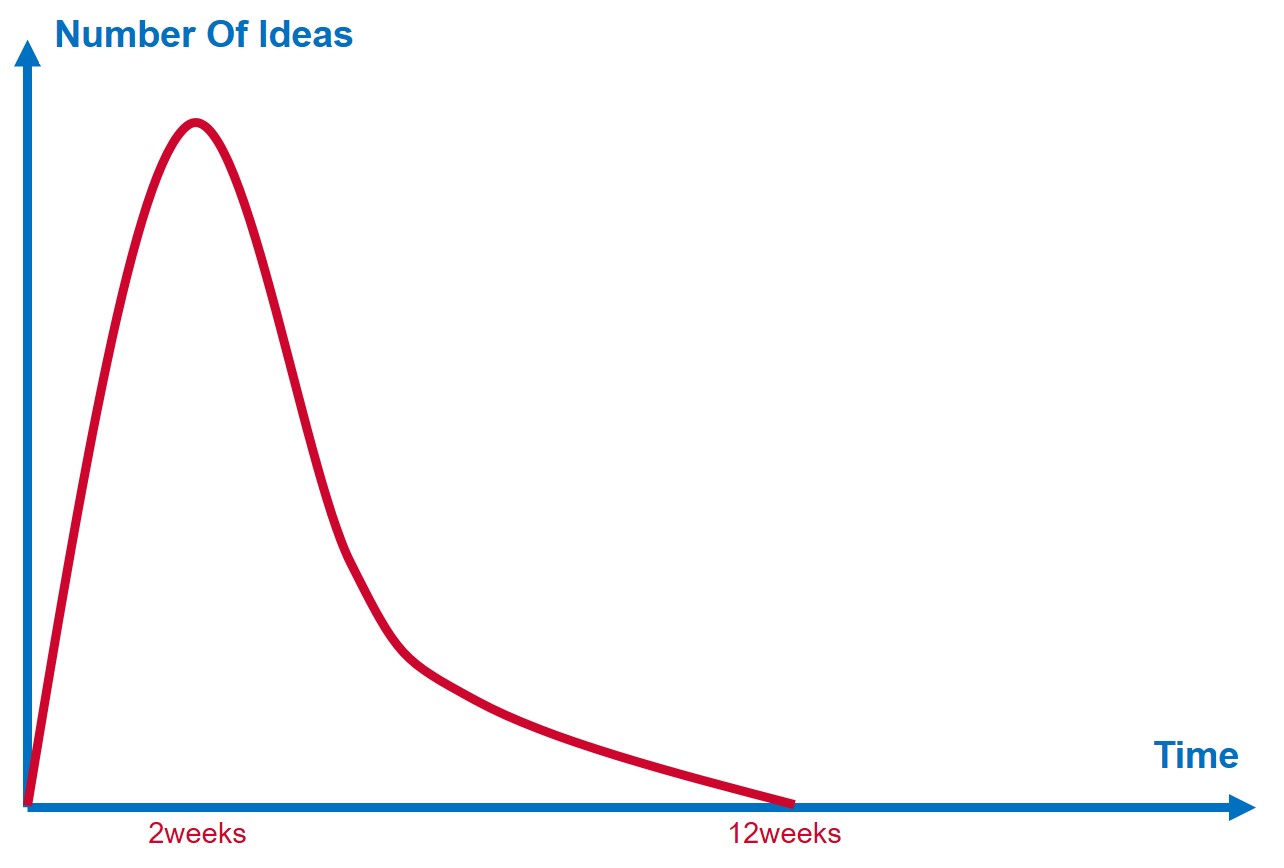
First up, a couple of universals. If it’s the first time an enterprise is considering having a Suggestion Scheme (alarm bells should already be ringing!), then what we know will happen is a massive backlog of frustrations will be unleashed. Lots of suggestions will arrive. The flood will continue for a while, but after it peaks there will be an initial sharp decline followed by an ever-slowing trickle down to an embarrassed zero. Something like this…
suggestion 1

…which, if it looks like the first half of the Hype Cycle curve, is probably no coincidence. A trigger followed by a ‘peak of over-inflated expectations, followed by a ‘trough of despondency’, followed, if matters aren’t corrected, into a lonely, curled-up-in-a-corner death.

Second universal: the Law of ‘Try Again’. When the dust has settled on the previous failed Suggestion Scheme attempt (and very likely when there has been an (in-)appropriate change of personnel) it is time to try again. The resulting idea-count curve will look the same. Only the peak will be lower, and the death will come sooner. This trend will continue in a patter of ever-decreasing circles each time there is a new iteration.

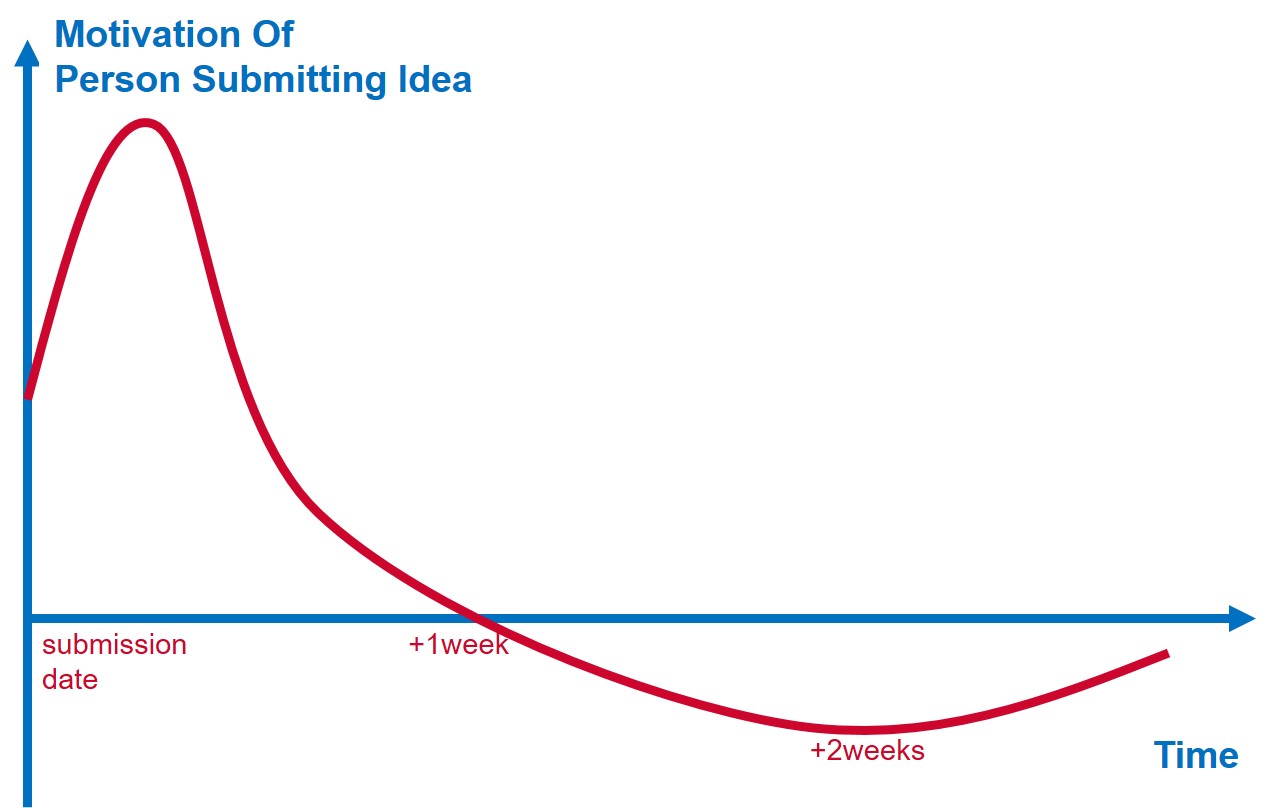
There are many reasons why Suggestion Schemes fail, but two stand out. The first relates to the amount of time it takes for management to respond when a person submits a suggestion. Here’s another curve…
suggestion 2

…it too looks a lot like the Hype Cycle. The vertical axis this time is about motivation of the person that’s just taken the brave decision to submit an idea. What the graph basically says is that if that person doesn’t get some feedback on their idea within a week, their motivation is effectively disappeared; if they don’t get feedback within a fortnight, their idea-submitting motivation has dipped below zero. Which effectively means they now see the Suggestion Scheme for the joke that it is. Not that it was ever funny.

The second reason for failure flips us to the management side of the equation. No-one – managers included – comes to work intent on doing a bad job. No manager sets out to de-motivate the people that work for them. The reason it ends up happening is because few managers understand the vonClauswitz ‘critical mass at the critical point’ rule. Which, in Suggestion Scheme terms means, if you need to respond to the suggestions that arrive into the Scheme within a week and there are only so many people able to provide that feedback, then that is the critical mass. If the critical mass isn’t capable of handling all the suggestions in a timely fashion, the critical point can’t be ‘every employee’. It’s only possible to launch the scheme, in other words, to the size of population that management can reliably respond to within a week.

This in turn requires us to think about a final ‘universal’: Innovation Capability Maturity. The type and size of Suggestion Scheme an enterprise might consider deploying, also depends crucially on the Level of Capability of that enterprise.

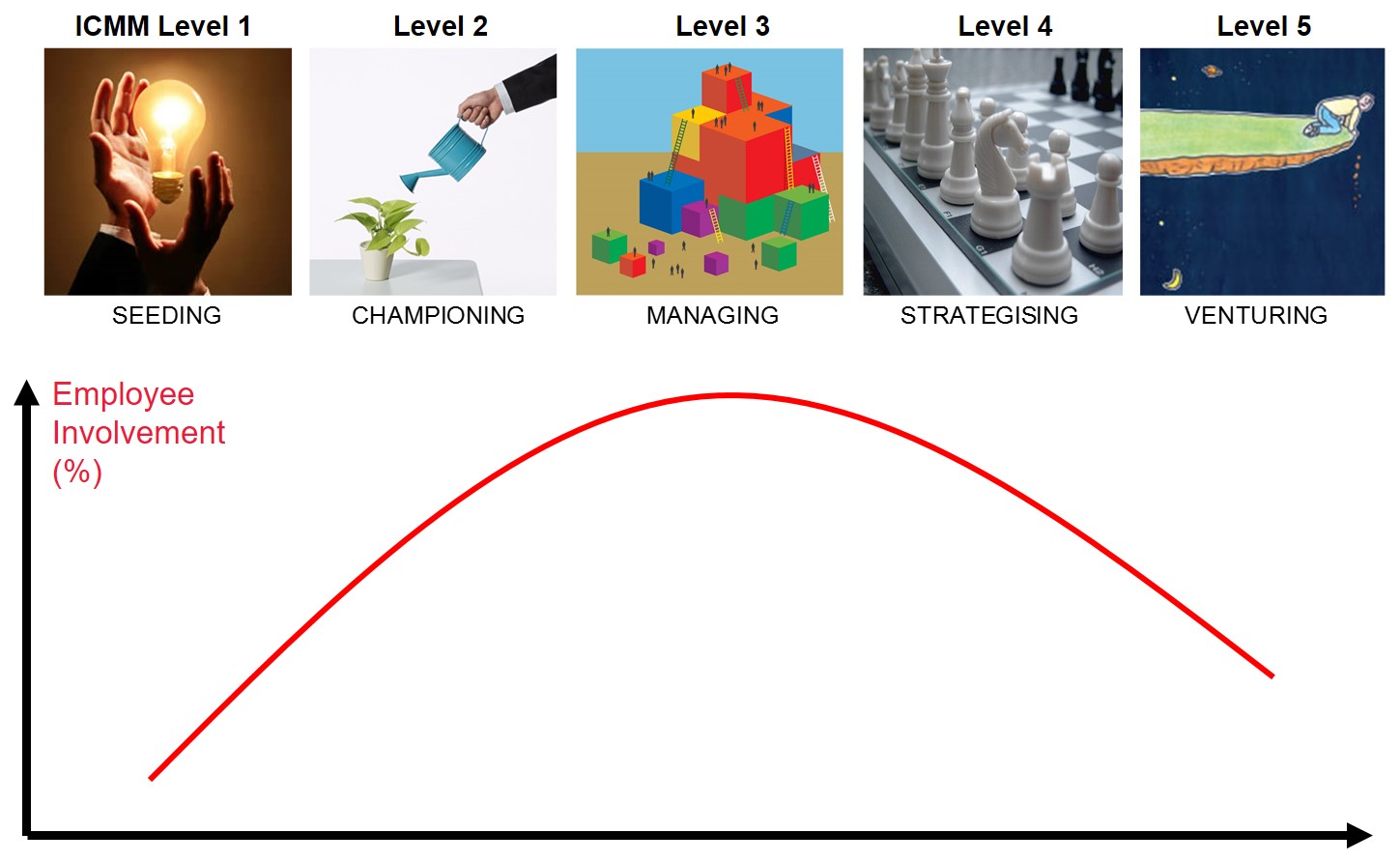
There are currently five distinct Levels in our Innovation Capability Maturity Model (ICMM). Each requires a different Suggestion Scheme strategy, with different objectives:

ICMM Level Primary Objective Key Contradiction Key Success Driver
1 getting anybody to buy-in lack of trust creating a ‘sense of progress’ – real success stories (size immaterial)
2 getting anybody to stay in insufficient (time) resources releasing time from day-to-day work to explore improvement ideas
3 getting everyone to buy-in suggestions get stuck at silo walls cross-functional teams and KPIs
4 getting people to suggest good questions rather than answers “a good question is worth a thousand answers” = undoing lots of previous suggestions good questions = contradictions, customer outcomes (tangible & especially intangible)
5 achieving requisite question/answer ratio prioritisation of questions and their multitude of answers embracing complexity, surfing the edge of chaos, and emergent markets

Taken all together, the very likely connection between ICMM Level and the number of employees productively engaged in Suggestion Scheme activities will tend to look something like this:
suggestion 3

Which means a Level 3 organisation like – all-time classic Suggestion-driven culture – Toyota will have everyone engaged in submitting and implementing improvement ideas. Versus a Level 1 organisation (i.e. most organisations on the planet), which really ought to have a much lower (‘critical mass at the critical point’) proportion of people asked to submit suggestions. But then also versus what we might expect to see in a Level 5 enterprise (of which there are probably, realistically, two or three on the planet), where there’s a living realisation that questions are much more important than answers, that important questions require a lot of time and effort to answer, and that the real trick in life involves understanding and embracing complexity – understanding how the world works at a ‘First Principles’ level, and looking for non-linearities in which small inputs create non-linearly spectacular outcomes.

Welcome to the machine.

When In Doubt, Do No Harm #1: Peanuts

peanut1


In seat 32F, Geoff Knight opens his snack-size bag of peanuts, tips a small pile of nuts into his hand and drops them into his mouth. The camera zooms in on a tiny, sub-micron shard of peanut debris that accidently finds its way out of Geoff’s mouth. The camera pans around, tracking the shard as it swirls upwards towards the overhead lockers.

45 seconds later, in seat 14A, four-year-old Holly Payne starts tugging on her mother’s arm. The first signs of anaphylactic shock begin to kick in.

Two minutes later, the cabin-crew are scrabbling around looking for the emergency epi-pen before Holly’s throat closes up completely. For a moment it’s touch and go whether Holly is going to make it or not. Some of the crew look frightened. Next time, they vow, we’ll make sure no-one eats nuts on the plane. Handing out pretzels and telling passengers not to eat nuts for a couple of hours is a tiny sacrifice. Who wouldn’t abide if they knew the stakes?

This is how fragile we have become. The bottom – hopefully the bottom – of a long, slippery slope of best intentions delivering worst possible outcomes. Doing incredible harm by mandating the opposite.

40 years ago kids ate dirt. I remember a friend of mine telling me how his parents had caught his little sister eating what they thought were raisins off the kitchen floor. They turned out to be woodlice. They stopped the child from eating any more, but the main thing my friend remembered was how they’d also burst out laughing. Partly because their daughter was eating woodlice, but also partly because they didn’t know exactly how many.

Eating woodlice is probably not such a good idea. If we eat them and they make us sick, that’s a precious feedback loop: now we know not to eat them again. If we eat them and we don’t get sick, it was probably okay. Natural systems are full of these kinds of feedback loops. They’re an important aspect of sustainable self-organising systems. They’re also an important way of making those systems more resilient. Natural systems need to be stressed. If we remove the stress, we make them weaker, and more fragile. During the last 40 years, by making the world a lot cleaner, more sterile place, we’ve made ourselves a lot more fragile. Allergies at epidemic levels; asthma at epidemic levels. We’re literally sanitising ourselves to the edge of oblivion.

Don’t get me wrong, I have massive sympathy for Holly Payne and her parents. Having a child so allergic to such small quantities of peanut dust (it’s a true story, by the way, albeit I changed the names) must be a living nightmare for them. But the answer to their tough problem really isn’t to start banning peanuts on aeroplanes for everyone else.

I don’t mean this in a selfish, ‘I like nuts, so why should I stop eating them?’ way. I’d be very willing to help arrange for Holly to walk around in her own hermetically-sealed flying suit with it’s own dedicated ultra-pure oxygen supply if needs be. What I’m trying to get at is that attempts to ban nuts on planes – or anywhere else for that matter – causes harm to all of us. The reason we’re not all – yet – allergic to peanuts and other ‘contaminants’ is that we get to breathe un-cleaned, un-conditioned air that’s full of all sorts of microscopic harmful crap. That’s the stuff that keeps us all resilient and healthy.


On Press Conferences And Emotional Maturity

I’m in the US at the moment. It’s the day after President Trump’s first big press conference. The media is in heaven. The polarization of the nation seems to be heading in to over-drive. Was Trump’s performance the first signs of a personality in meltdown? Or was it a double-bluff master-class in deflection and chaos-building? I thought I’d let our PanSensic tools have a little look-see.

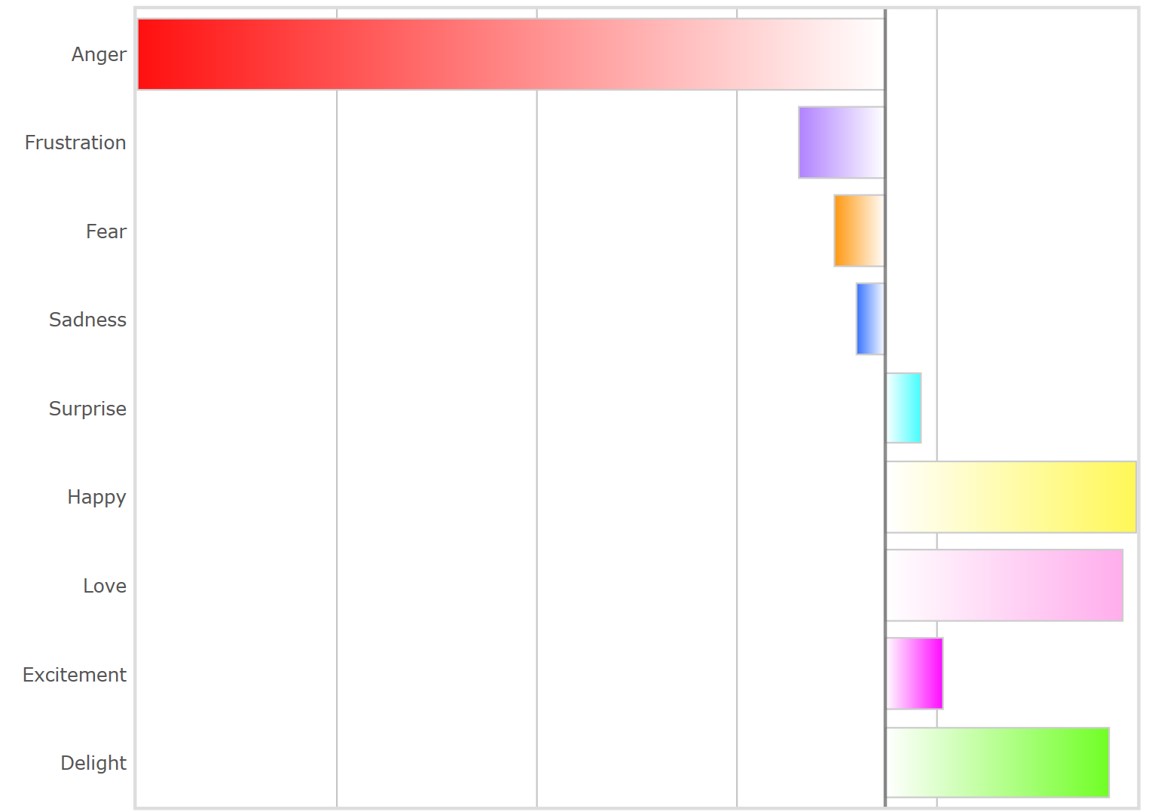
Here’s what emerges when I plugged a transcript of Trump’s words into the software. First up a basic sentiment analysis:

trump press 1

Not too much ambiguity there. Trump might have said he ‘enjoyed’ locking horns with the press, but I think this picture tells another story. For the most part, in lay-person terms, he lost it.

Then I plugged the transcript in to our Archetypes tool. This is the tool to gauge emotional maturity. Even without knowing the in-detail meaning of each of the elements the tool is measuring, hopefully the labels are somewhere close to self-explanatory. I thought it would be interesting to see if anything might have shifted between the 20 January inauguration speech and yesterday’s press conference. Turns out it has:

trump press 2

The Innocent-Warrior has turned into an Orphan.

I don’t think that’s good news.

Gravesian Psychology & Donald Trump

Okay, I know it’s difficult to read anything of any long-term significance from the analysis of one speech, but then again, it was an important speech. A speech intended to set the tone for the next four years. I’m talking about Donald Trump’s inauguration speech on January 20.

And the reason for being intrigued by the ‘only America first’ speech is how something had changed compared to what President Trump had been saying through the course of the election campaign. 

Here’s the results of our Mental Gears analyses. On the left-hand side is a composite of the various different speeches the President had made through the campaign, and on the right is the equivalent Mental Gear profile result when we analyse the inauguration speech.

 inauguration

Spot the difference?

No more ‘Scientific’ (Orange) calculation and desire to look at options, and lots more (Blue) Order. Which means goodbye ambiguity, and hello ‘with-me-or-against-me’ absolutism.

As I say, I’m not sure if anything significant can be read into the shift. If I was going to read anything significant into it, I’d say that the ‘allegiance to all Americans’ comment in the inauguration speech actually means something closer to its polar opposite.


Fragile Antifragility

fragile 1

I just had the major misfortune of acquiring a copy of the latest Antifragile bandwagon-jumper book, ‘The Anti-Fragility Edge’. So bad was it that it prompted me to compose my first ever Amazon review, in a no doubt vain attempt to warn people away from the dangerous, counter-productive monstrosity I believe it to be.

The first problem is that Nassim Nicholas Taleb ignited what looks set to become a pretty big fire when he gave the world the word antifragile back in (was it really that long ago?) 2012.

The bigger problem, looking at the four years that have passed since the book first appeared is perhaps that Taleb is, to quote a different favourite author, ‘too far ahead of the crowd for people to recognise he’s part of the crowd’. And that includes – on the evidence of The Anti-Fragility Edge or any of the other handful of books that have tried to cash-in on the antifragile meme – all the early-adopters required to turn the initial spark into a proper flame aren’t up to the task at hand.

This is somewhat ironic when I think about what antifragile is all about: making systems stronger by subjecting them to adversity. Having your good work misinterpreted and mangled by people who clearly don’t understand what they’re doing, could, in some weird parallel world be the exceptions that prove the rule. Maybe, Nassim Taleb, is sat in his lab thinking, these terrible books are the very stressors that my beautiful Antifragile baby needs in order to become the global phenomenon it deserves to be?  

Sadly, I don’t think the world works that way. Nor does antifragility. At least not at this point in its evolutionary history.

One of the key ideas behind subjecting systems to adversity, is that you need to know just how much adversity. It’s a classic Goldilocks and the Three Bears scenario: too little adversity and the system doesn’t need to shift and so doesn’t evolve; too much adversity and you kill it.

In TRIZ terms this need to find ‘just the right amount’ of adversity represents a classic contradiction problem. Antifragile needs adversity and no adversity.

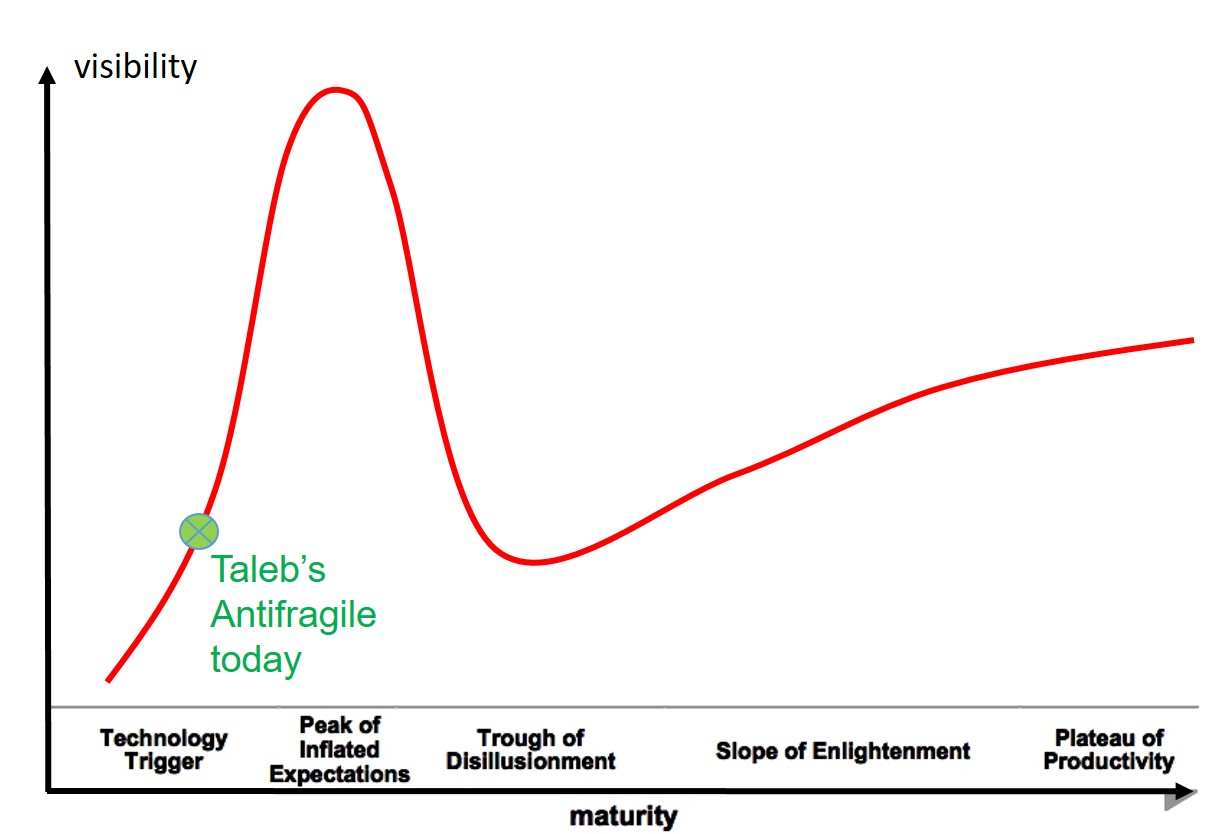
Solving the contradiction means knowing exactly when and how to separate the two contradictory requirements. And, when it comes to the rise – or otherwise – of an important new idea, one of the best ways to understand the separation dynamic is to bring the Hype Cycle in to play. What the Hype Cycle tells us is that there are clearly different stages in the evolution of the new idea. During some of the stages, the system is very vulnerable and needs relatively little adversity, and then during others, the system is much more accommodating and actually needs lots of adversity in order to reach a meaningful maturity.

fragile 2

The big problem with the current crop of bandwagon-jumpers is that they represent exactly the wrong kind of adversity at the wrong time. The Anti-Fragility Edge, for example, purports to be a ‘How To’ book. In theory, this is a good idea. Taleb’s book is a ‘what’ and a ‘why’ book. If antifragile ideas are going to take hold, someone will have to hold the hands of the fragile and guide them towards greater levels of antifragility. No ‘how to’ book, no widespread adoption. But if the ‘how to’ book that people locate is a really bad book, all it does is kills the idea before the idea has a chance to get off the ground.

In the long term the dire post-Taleb antifragile literature will no doubt fade into historical insignificance. In the meantime, the fact that they’ve appeared when they have means the only impact they will have is to delay meaningful action. And my guess, given the enormous operational-excellence-driven fragility of most of the enterprises on the planet right now plus the even bigger narcissist-driven instability heading in all our directions, is that this can only be a bad thing. Predictable, maybe, but bad nevertheless.


Brexit & Root Cause Analysis Paralysis

brexit 1

In the end we never got a chance to publish our Brexit analysis. Time moved on and other things seemed more important. Like the American election. Which turned out – per our prediction – pretty much the same as Brexit. And which also triggerred much hand-wringing and self-flagellation by the media, political commentators and losing-candidate voters of the world.

Now I find myself reading the media’s post-mortem analyses of 2016 and fighting off a gnawing sense of depression. Not because the world is heading towards crisis and catastrophe – we worked that out a few years ago already – but because of the media’s deepening misunderstanding of how the world works.

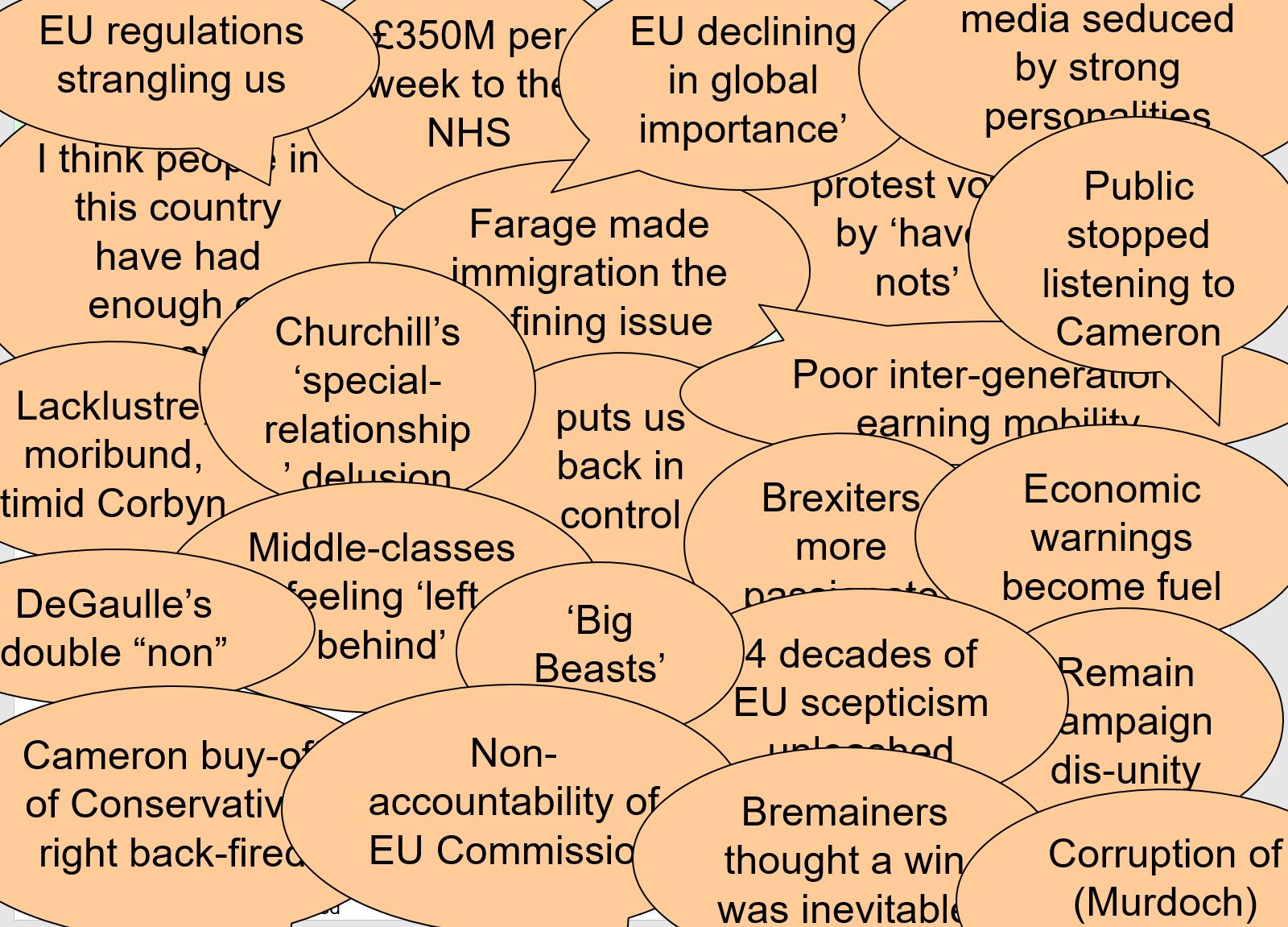
The search for the ‘root cause’ of the Brexit result bumbles along fruitlessly, with six months of incubation seemingly doing nothing to bring any clarity. A lot like the drunk man looking for his car keys under the streetlight. The media demands a root cause because they’ve been taught there must be a root cause. There must be something or – preferably – someone to take the blame. The problem is, like the drunk, we’re looking for something that isn’t there. But we look anyway because it’s easier than thinking.

At least the end-of-year media analyses allowed me to update our collection of previously mooted Brexit ‘root cause’ candidates. Of which there have now been a lot. Some more ridiculous than others, but all ultimately doomed to pointless either/or debates in pubs up and down the land and on Question Time. Do we blame Gove? Or Johnson? Or Churchill (!)? Or deGaulle (!!)? Wrong question, dummy.

In a complex system, there is no such thing as a root-cause, and so any attempt to try and find one is a Sisyphus-like exercise in pushing dumb-as-a-rock thinking up the mountain, thus ensuring no meaningful progress gets made. Maybe that’s the point?

Personally, I’d rather try and make sense of what’s happening. Not that there’s anything I am likely to be able to do about the result. But at least, I’ll have a better idea about how I and the Systematic Innovation team can best find a place in the world that makes sure we’re more likely to thrive than dive.

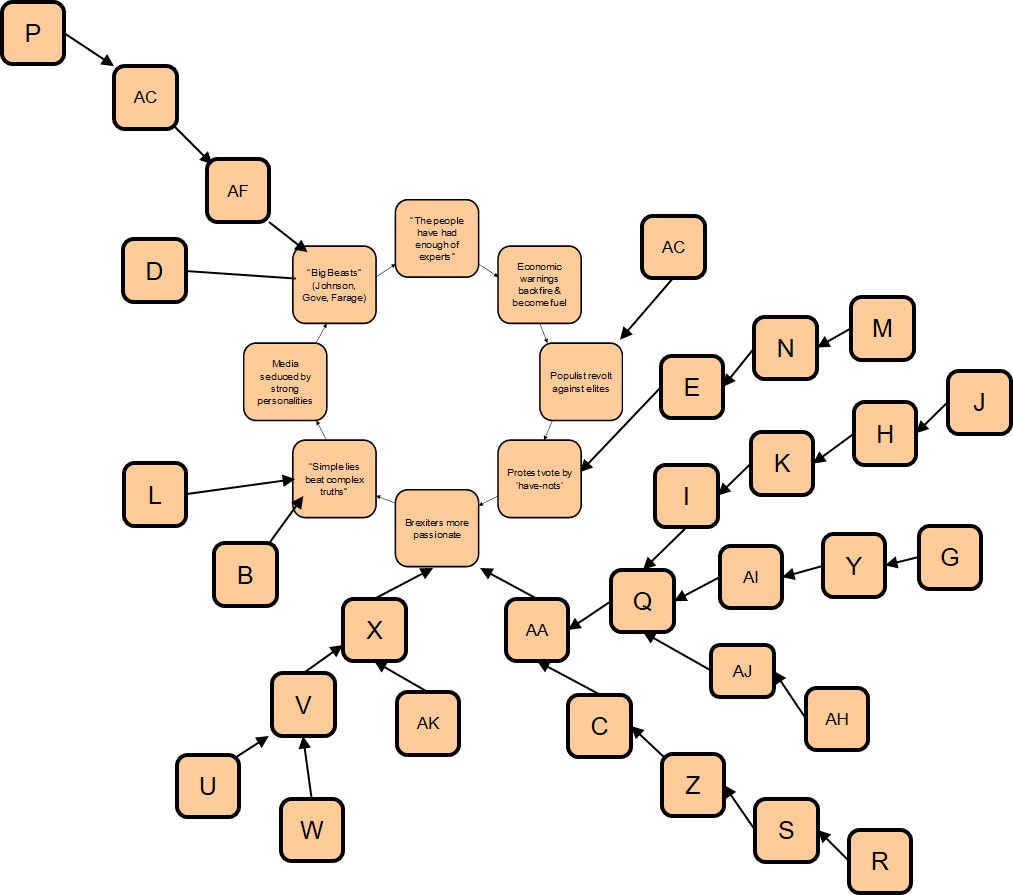
Here’s what happened when I took all the ‘root cause’ candidates and shifted the focus to mapping the relationships between them:

brexit 2

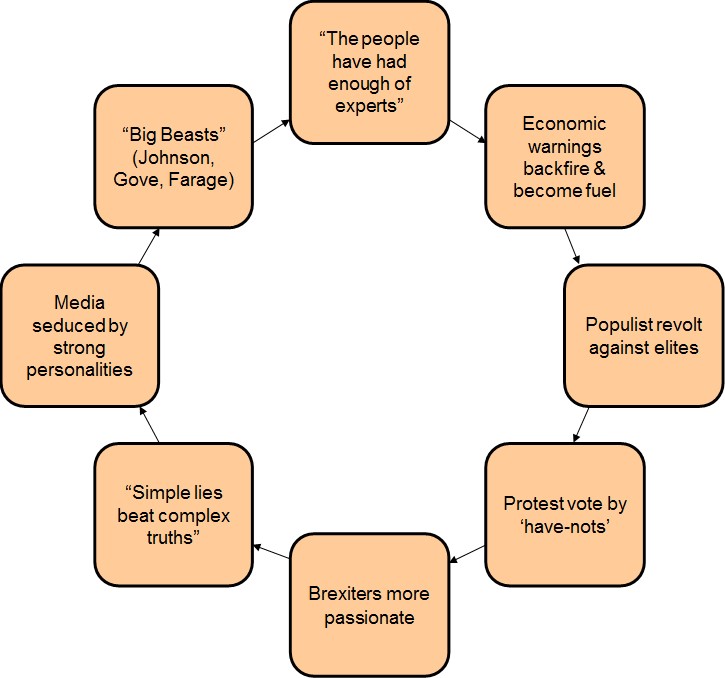
I know, I know, you can’t see all the details. That’s not the point. The point is that the picture hopefully makes clear that there is no such thing as a root-cause. The only good news, if ‘good’ is anywhere close to the right word, looking at the rats-nest is that there is only one vicious cycle. The conspiracy of causes, in other words, all seems to converge on one downward loop of hell. Here’s what it looks like in more detail:

brexit 3

The main conclusion this picture perhaps suggests is ‘hello loudmouth, bye-bye truth’. Or, ‘welcome to the shoot-the-expert, post-truth, best-fiction-wins society’.

The other might be that we all begin to nurture and value the truth-curators once more. Or maybe, better yet, the people that write the truth-detecting software. I think the mist is clearing. I think my 2017 is becoming clear…

The (Innovation) Pollen Path

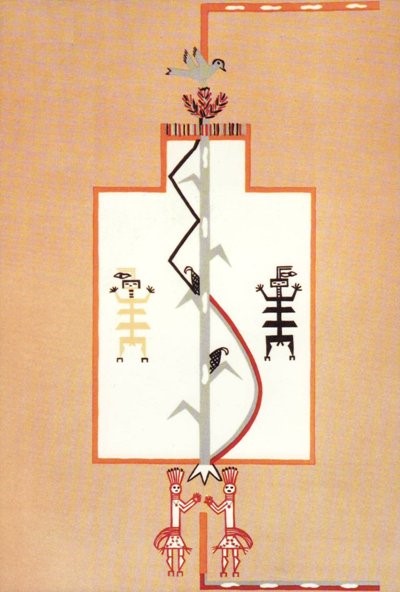
pollen1 “Oh, beauty before me, beauty behind me, beauty to the right of me, beauty to the left of me, beauty above me, beauty below me, I’m on the pollen path.”

I finally got a chance to read Joseph Campbell’s last book, ‘The Inner Reaches Of Outer Space’ while on a trans-Atlantic flight this month. If there are two kinds of people in life – lumpers and splitters – Campbell, like TRIZ-founder, Genrich Altshuller was one of my favourite someone-somewhere-already-solved-your-problem, ‘lumpers’.

Campbell’s major pattern-finding contribution was the Hero’s Journey – the result of a lifetime spent studying and revealing the underlying patterns of successful literature. As far as I can tell, he never understood the concept of s-curves and discontinuous change as we now know them in the innovation world, but the Hero’s Journey described the precise steps that discontinuous change requires.

The Inner Reaches Of Outer Space explores the underlying patterns between a different kind of discontinuous change, life transitions. And especially things like rites-of-passage transition into adulthood. These too, Campbell shows, are also Hero’s Journeys.

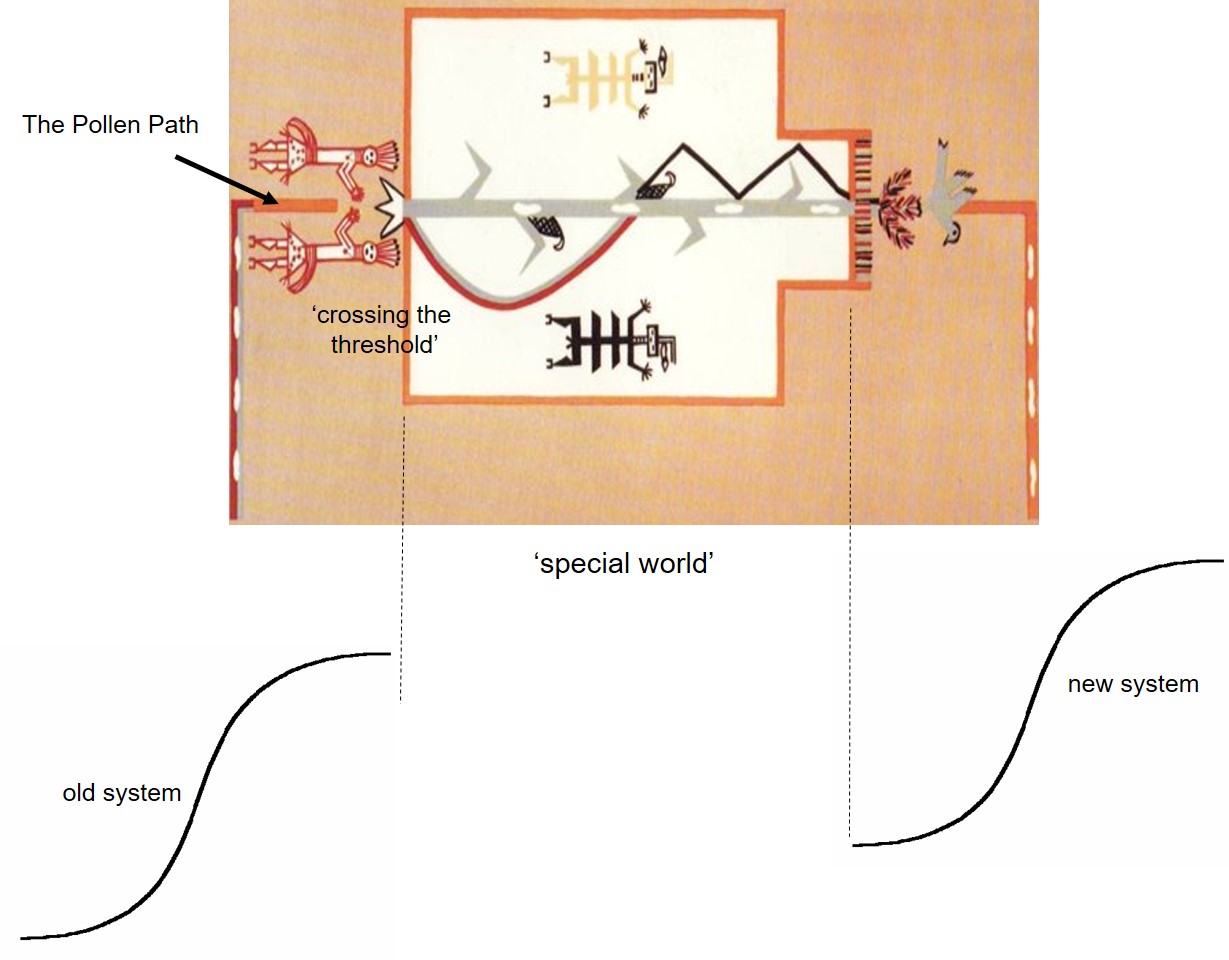
My favourite part of the book was the Pollen Path. And particularly Campbell’s description of how the Navajo elders mapped out the initiation journey of their young adults. Again, neither Campbell nor the Navajo elders knew about S-curves. Except, as we can see in the depiction of the Pollen Path, they absolutely did.

pollen2

To the point that, just maybe, they add a few clues to the nature of discontinuous change process:

Firstly, the Pollen Path itself, which is all about the period in the Journey before you jump off your current s-curve and start the search for the next. Before you jump, make sure you prepare yourself with some growth-sparking, high-density nutrition.

Then, when you’re in the ‘Special World’ no-mans land between your old s-curve and the next – the place where, along the Pollen Path, you’ll find rainbows and lightning you’ll also need:

   * Food along the way (the corn ears hidden along the path in the painting)

   * Both male and female traits (the black and yellow characters on either side of the path)

   *  To stick to the middle ground and recognise that the cul-de-sac detours are precisely that (the go-nowhere offshoots from the path)

Sure enough. Nothing new under the sun.

Optimizing Yourself Into Chaos

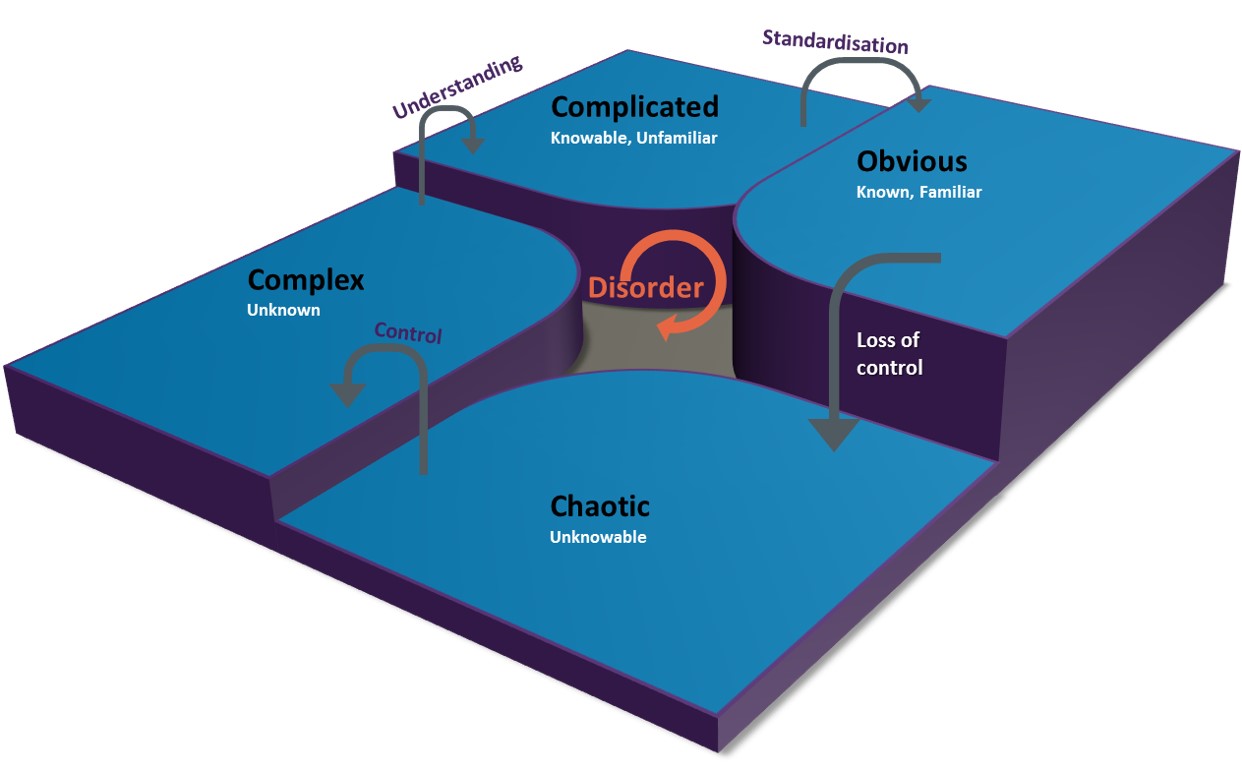
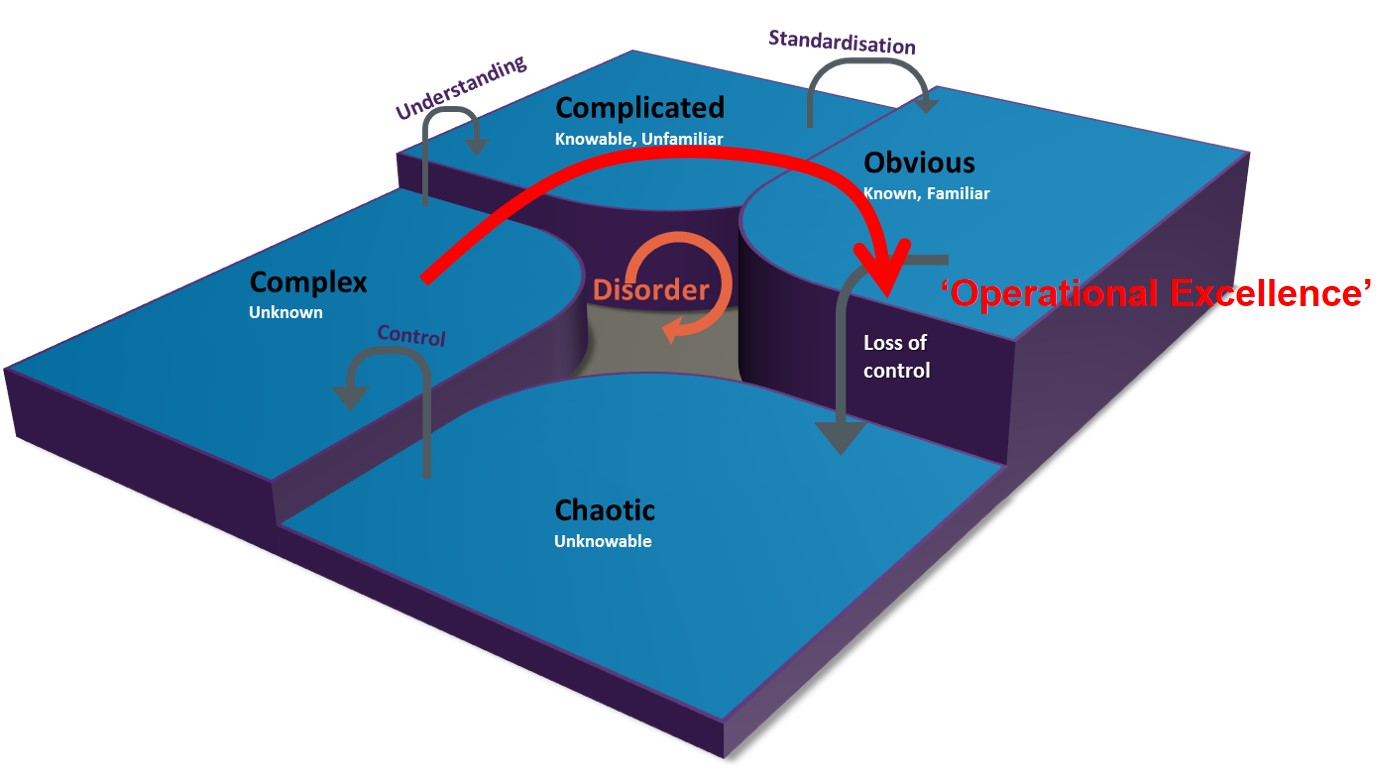
I often find myself showing a copy of Dave Snowden’s Cynefin model when I need to explain some of the challenges of innovation. People seem to instinctively ‘get it’. Especially when I use this three-dimensional version of the model:

cynefin 1

It’s great beauty – the thing that seems to resonate most with prospective innovators struggling to cope with their ‘Operational Excellence’ colleagues – is the cliff-edge between ‘Obvious’ and ‘Chaos’. The effect becomes amplified when we think about Operational Excellence as a way of thinking that seeks to ‘manage’ situations that are inherently complex through a strategy of simplification. Ever since F.W. Taylor, the prevailing logic has been that its only possible to scale businesses by segmenting work into small chunks that are easily trainable into new employees. Looked at through the Cynefin lens, Taylor’s efforts can be seen as a series of scientific studies to understand each given operation in a process, such that everything could be cropped down to a very simple set of instructions. Taylor worked out the optimum size of shovel so that a novice shoveller could become productive almost immediately after they picked it up. Taylor’s view when talking to the shovellers was, ‘I’m here to make your job easier for you’. When he was selling his process to the managers, on the other hand, he was effectively saying, ‘we don’t need workers with brains, I’ve done all the necessary thinking for them’. In Cynefin terms, Taylorism specifically, and ‘Operational Excellence in general can be seen as a management strategy that looks like this:

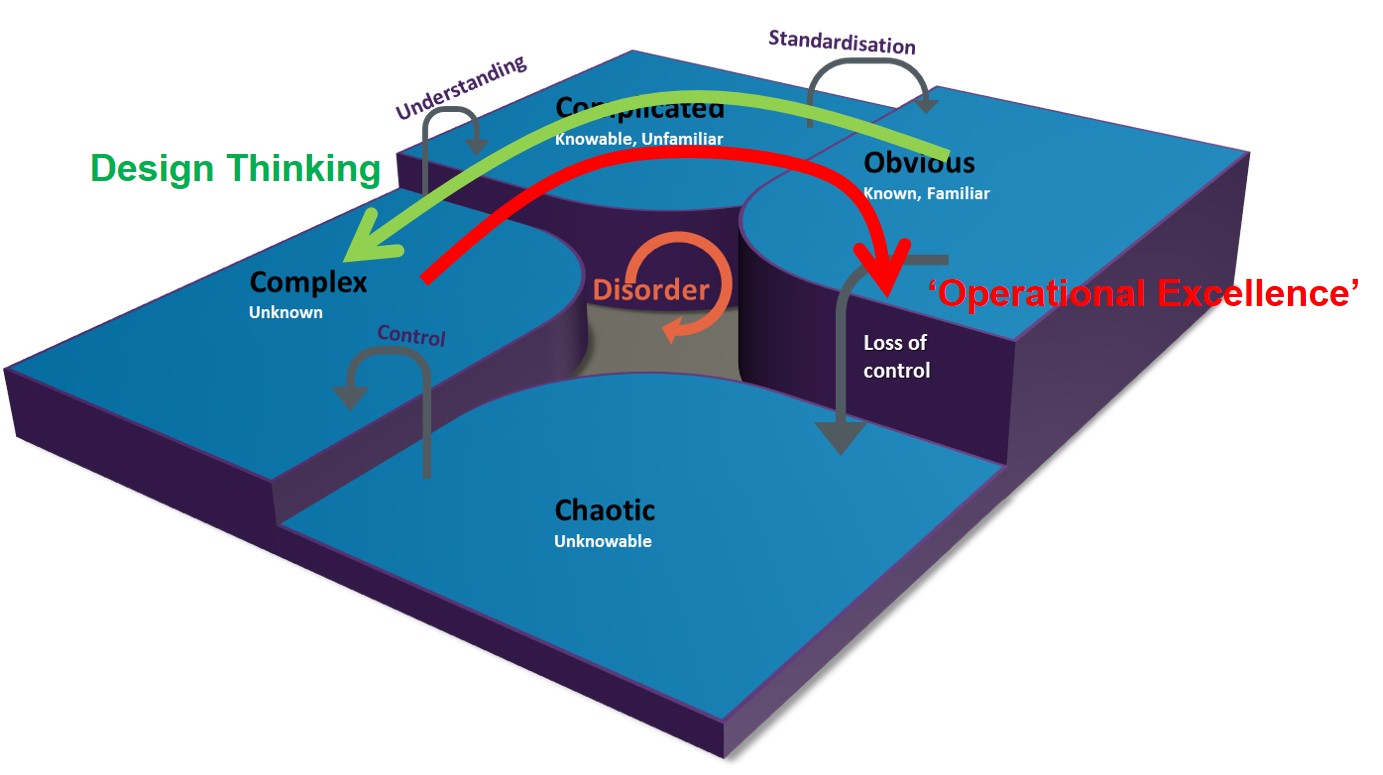
cynefin 2

What Taylor didn’t understand, and what most Operational Excellence people still don’t usually understand (at least until its too late) is that their efforts are optimizing systems to the edge of chaos. Nearly all of 430 Fortune500 companies from 1950 that no longer exist, disappeared because they fell off this cliff. They ‘always did what they’d always done’ because it was efficient to do so. Within their bubble at least. The only problem was that the world outside that bubble had moved on. They hadn’t understood that in a complex environment like ‘the market’, if you always do what you’ve always done, you can only legitimately expect that you will probably get what you’ve always got.

As more and more enterprises become aware of complexity, they slowly begin to realise that Operational Excellence is a temporary, stop-gap answer. One of the strongest signals of this awareness is the current vogue for ‘Design Thinking’. Especially with the management community… designers, good ones at least, inherently understand complexity and ‘do’ design thinking naturally. Managers for the most part don’t. Until they’ve spent a week at a D.School and ‘see the light’. Divergence and experimentation are the order of the day. Most Design Thinking educators might not know that they’re doing it, but when we look at Design Thinking through the Cynefin lens, we see that it is attempting to reverse the killer effects of Operational Excellence. Design Thinking is about embracing complexity:

cynefin 3

It’s not clear to me yet that Design Thinking will help save the day as far as many enterprises are concerned. Partly because it has typically been presented in a stand-alone faddish manner, and partly because when new users attempt to dig below the surface, there’s not an awful lot of usable content. Not to mention that an awful lot of it is a crude re-badging of Edward De Bono’s work (clue: look at all of the ‘Big’ Design Thinkers – they’re all British and were all raised at a time when, if you were interested in creativity, you inevitably found yourself reading The Mechanism Of Mind and its surrounding family of books).

I think Cynefin has a role to play in helping to solve this ‘save the day’ problem. Especially when we connect the Cynefin model to the evolutionary S-Curve.

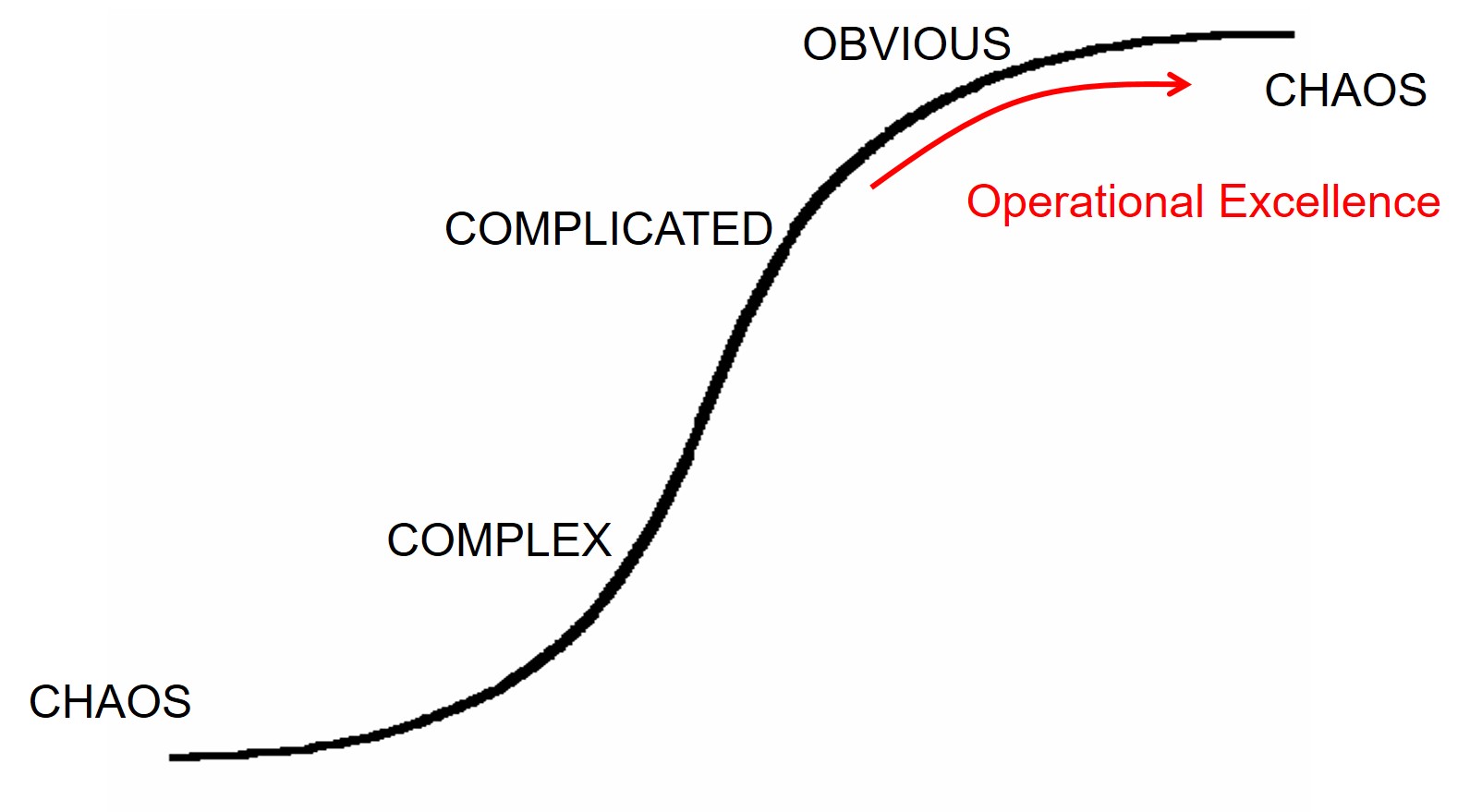
Operational Excellence, in S-Curve terms, is all about climbing the current curve. Combine this idea with the different stages of Operational Excellence as emerge from th Cynefin model and the S-Curve climbing journey looks something like this:

cynefin 4

At the start of a new-S-curve, Chaos reigns. Lots of prospective innovators are trying to find a new solution and most will fail.

Eventually one or two ‘lucky ones’ will prevail. They’ll find ‘a’ solution that is good enough to attract one or two brave early customers. There are no processes or protocols, so provider and customer need to be engaged in a mutually beneficial dance to evolve the solution to a point where it becomes worth the investment of everyone’s time and money. ‘Fail fast, fail forward’, and other complexity-consistent strategies are brought into play. Thought of in terms of the Hype Cycle, this period of evolution is all about peaks of over-inflated expectation and troughs of despondency.

And then, if everyone pulls together well enough, the solution finds itself transcending a tipping point. Now it is useful enough that an increasing number of customers want the solution. Sales and Marketing teams get involved, and in order to help them sell the beautiful new solution, brochures get written and a sales process crystallises. ‘Understanding’ of how to sell and how to produce economically means the prevailing management strategy devolves to ‘complicated’.

Some time later, usually when the growth hits an inflexion point and the sales team start missing their targets, the focus shifts towards efficiency. Cut the bottom line. Along comes Lean and SixSigma, Value Stream Maps to try and squeeze every last drop of ‘waste’ from the system. The management strategy devolves further into the ‘obvious’.

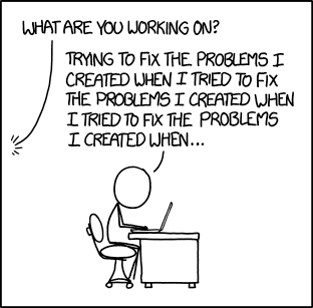
…And keeps going, all the time things feeling more and more like a game of corporate whack-a-mole. Every time we try and improve one part of the system, it seems to have an adverse effect on some other part…

…the enterprise teeters ever closer to the edge of Chaos… no-one is able to improve the system any more, and those that are smart enough to understand what’s happening start to leave the stalled ship and go looking for lifeboats. Their chaotic search for the new solution is now on. The descent of the beautifully optimized old enterprise into chaos, on the other hand, is now merely a matter of time. The long established management team asleep at the wheel, safe in the knowledge that the operational excellence goals have been met, and their bonuses paid in full. It won’t be long ’til they’ve optimized the whole shebang full circle back into chaos.

Agile-Lean-SixSigma – Stop The Ride, I Want To Get Off

carousel 1

So, the big news at the Lean conference seems to have been Agile. Which is a bit depressing when you think about it. I guess these things have to take turns. A few years ago it was Six Sigma. I imagine, in a few more years’ time, the carousel will have gone full circle and we’ll be back at Lean again. If it wasn’t so depressing, you’d probably laugh.

Someone asked the question, ‘has Lean innovated?’ I thought this was quite a good question. The answer didn’t appear to be immediately apparent. Clearly some Lean initiatives have delivered tangible benefit to the organisations that have deployed them. But is the benefit coming from step-changes to the Lean methodology or merely optimization of what’s been there from the first time Taiichi Ohno devised a better way to organise Toyota’s production systems?

It began to sound like a contradiction. Innovation or optimization? Or innovation and optimization? The more I thought about it, the more the resolution looked like a story of hierarchical separation. At the tool level, Lean has made several step changes. At the governing-principle level, I don’t think it has. The pillars of Lean have not changed over the years. Lean practitioners have, at best, optimized their understanding of these pillars. No doubt derailed along the way by diversions to investigate Six Sigma. And more recently, it now seems, via Agile.

Maybe the integration of the three is the innovation?

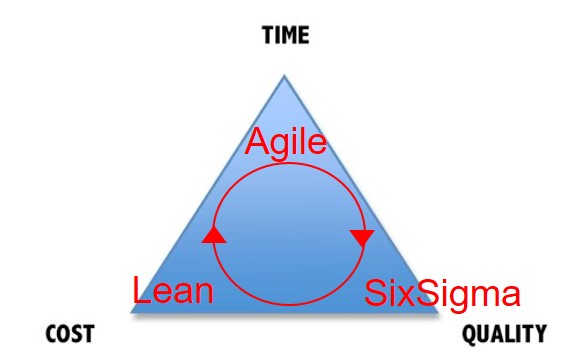
Sadly, if we look at the Iron Triangle of business, all Lean, SixSigma and Agile are really doing is shifting the emphasis between Cost, Quality and Speed. It’s still the same old same old: cost, quality, speed – choose any two you like… “everything was taking too long… so we went Agile… then we realised we were just doing the wrong things faster… which made us a bit confused so we brought in the Six Sigma Black Belts… which took out some of the variation… but that didn’t make the customer any happier…” and, hey presto, the carousel has come full circle again.

carousel 2

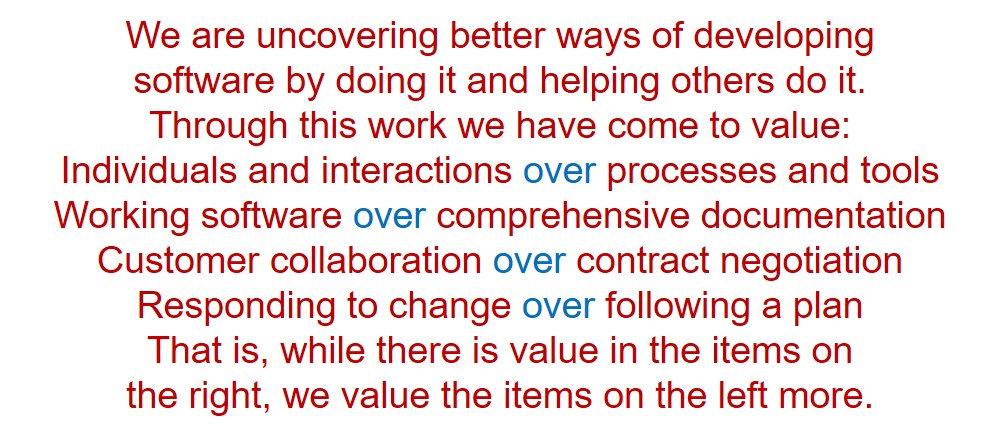
Should companies use Lean? Should they go Agile? Should they use SixSigma? Should they use Lean and Agile? All three? They’re all meaningless questions, because they’re all just causing the same stupid carousel to spin faster and faster. All three are fundamentally based on an erroneous assumption that life is full of inherent trade-offs. We can see it most vividly in the Agile Manifesto:

carousel 2a

‘Over‘? What are you talking about? What these lines effectively say is, ‘there is a trade-off between X and Y, and we’re biased in the direction of X. Granted, it’s a choice, and sometimes choices are good. But rarely is this so if the initial question was a dumb one. Why can’t I have individuals and processes? Why can’t I have responsiveness and a plan?

In fairness to the Agile world, they do at least acknowledge that the Quality-Cost-Speed carousel stops being fun after a few spins. Coming from the high revolutions per minute world of software development, Agile practitioners have realised faster than most that the iron triangle actually has a fourth side: Scope.

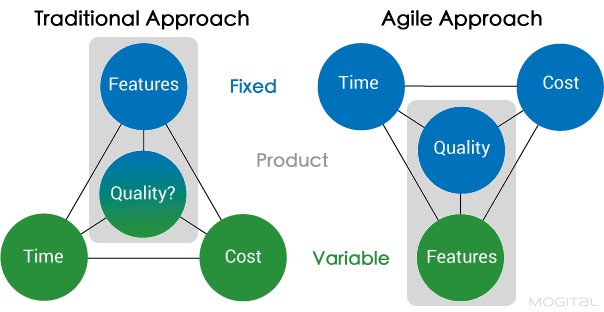
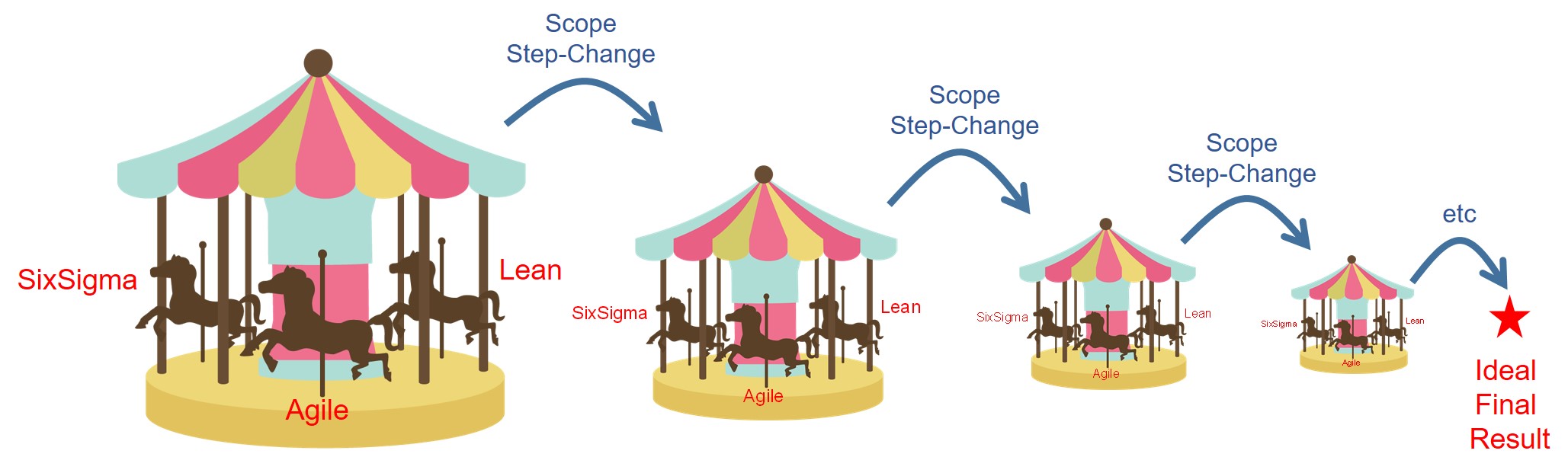
Adding Scope to the carousel ride ought to be a good idea. But, sadly, not if – as the Agile practitioners have done – you just use it as another trade-off parameter. Here’s how the Agile community describes their four-sided carousel ride:

carousel 4

Essentially this picture reads: let’s stop fixing Scope and oscillating between over-budget, late and inadequate quality, and instead let’s fix those attributes and let the Scope be the thing that varies. Huh?

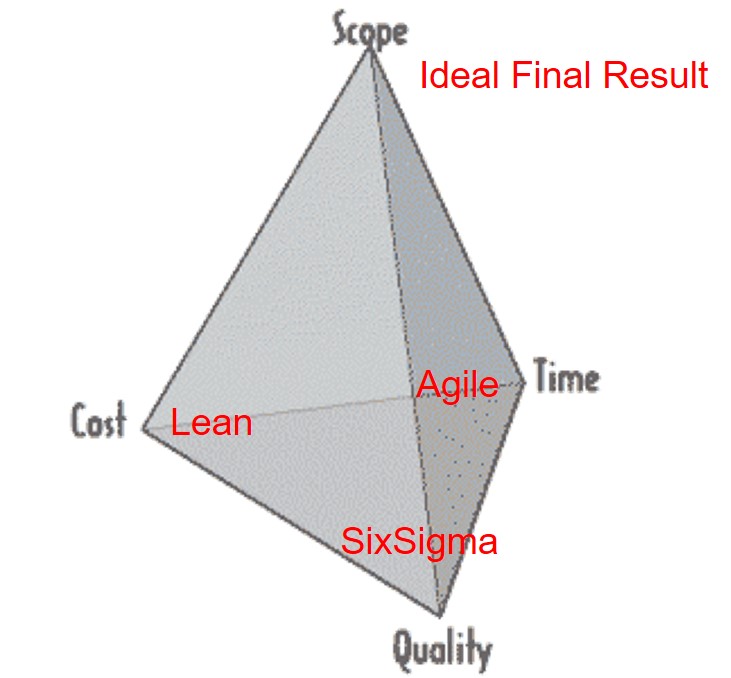
Again the wrong question. It’s not a trade-off. You just have to put yourself in the position of the customer to know that. The customer doesn’t want a ‘perm any three from four’ compromise. They want you to solve the contradictions and ‘get better’. Something like this:

carousel 3

Including ‘Scope’ on the carousel ride allows us to recognise that successful evolution has a direction. Everything evolves towards an Ideal Final Result end state in which all of the desire customer benefits get delivered ‘free, perfect and now’.

The way the world works is that we only step closer to that evolutionary end goal when we reveal and resolve contradictions. The only reliable method for doing that is TRIZ.

Lean, Agile and SixSigma have a role in life solely as optimization tools. The right blend of those tools then depends on the relative importance of Cost, Speed and Quality at any given moment in time. When people on the optimization carousel start to feel queasy, it’s probably a sign that there’s a need to solve a contradiction and make a jump to a better carousel. Something like this maybe:

carousel 5

I wish this could be the end of the discussion. Sadly, I suspect it won’t be, and before too long we’ll start seeing Lean-Agile-SixSigma education programmes. As if this is some new kind of panacea. And then we’ll get Certification. And then Standards. And before we know it, the whole optimization carousel will fly off its axis and spin into futile oblivion. Still, I suppose it keeps everyone from having to deal with the real issues. Like giving customers what they might actually want.


Towards The Perfect Perfect

RoadSignPerfection

Progress happens fastest when contradictions are revealed and resolved. My job means I spend pretty much all my time looking for contradictions. Sometimes they reveal themselves more easily than others. Sometimes it’s necessary to dig quite deep before you discover things you thought were the same are actually not the same.

This is the experience I had when I attended the Lean educators conference last month. One of the governing principles of Lean is the drive for ‘Perfection’. For a long while I assumed this was the same principle as the ‘Ideality’ pillar in TRIZ. I thought, too, that both were present in order to provide those tasked with improving and evolving systems with a compass heading. Everyone knows that ‘perfect’ is a hypothetical end destination that will never occur in practice. Everyone in the TRIZ and Lean communities also knows that unless you know where you’re heading, you’ll never know if you’re moving in the right direction or not.

The fact that Lean ‘Perfect’ and TRIZ ‘Ideal Final Result’ are not the same kind of crept up on me during the conference. Lean people constantly tell me that Taiichi Ohno, the father of the Toyota Production System, made no distinction between innovation and optimization, and that in striving for perfection one would sometimes be making incremental improvements, and other times discontinuous jumps. I can kind of see this in theory. What happens in practice, however, especially if you examine the Lean toolkit, is that the incremental is precipitated much more readily than the step-change. Ohno’s start point was the elimination of waste, and specifically, what he saw as the overriding waste of ‘over-production’. All of the other 7, 11, 15 or – pick a number – ‘wastes’ were introduced merely because Ohno’s start point was deemed too abstract by those he tasked with improving Toyota’s manufacturing operations. The ‘Waste of Over-production’ in Ohno’s terms, by definition incorporated the potential waste of a lost customer, but if you look at the catalogue of Wastes being managed in most organisations, you will see how this difficult one tends to get side-lined in favour of the ‘easier’ internal wastes. This is particularly evident when we look at Lean Manufacturing initiatives. Anyone responsible for squeezing Perfection out of a production facility – like Ohno – has no ability to do anything about lost customers. ‘Perfection’ in this manufacture-oriented context effectively means building the Perfect Car. And that in turn means a car that leaves the production line having generated Zero Waste.

While this might be a good direction-providing (unattainable) target, it is very definitely not the same as the Ideal Final Result found in TRIZ. Like Lean, TRIZ focuses on the customer. The Ideal Final Result is first and foremost the customers’ Ideal Final Result. But there the similarity ends. In the Lean world, the customer gets a Perfect Car. In the TRIZ world, the customer gets Perfect Transport. In TRIZ world, there is a clear recognition that what customer’s really want is the Function. They are trying to get from A to B, rather than have a shiny new, waste-free, Prius in the garage.

Ideal Final Result in TRIZ is defined as the (unattainable) end point of delivering all of the desired Benefits, without any of the Costs or Harms. TRIZ, in other words, takes the B/(C+H) value equation and extrapolates it to its logical end point: all of the positives with none of the negatives.

The fact that Toyota still makes cars and didn’t invent Uber tells me that the Toyota Production System is very clearly not working towards the TRIZ version of Perfect. I think we can see similar dangers of having the wrong ‘Perfect’ goal in any organisation that find itself gazumped by upstart providers offering customers the function rather than the product. Whenever I see Lean being introduced into an enterprise, my first thought these days is, “here is a business heading on a ‘make the wrong thing perfectly’ road to certain oblivion”.

The TRIZ definition of Perfect is a better target, but it too – now I’m thinking about it – carries its own set of dangers. TRIZ emerged into the world at around the same time as Ohno was pulling together the various borrowed threads of the Toyota Production System. The world in the 50s and 60s – at least from a management perspective – was built very much around tangible and measurable factors. Value meant tangible-Benefits, tangible-Costs and tangible-Harm.

What 21st Century ‘design-lead’ companies like Apple, Tesla, and Uber taught the business world was that customer Value was as much, if not more, defined by intangible factors such as trust, fairness, autonomy, belonging and competence. The definition of the (unattainable) end target needed to change. And that’s why, whenever you see the Systematic Innovation version of the TRIZ Ideality equation, you’ll see it has the word ‘Perceived’ added to it. Value in the SI world is defined as Perceived{Benefits/(Cost + Harm)}, and Perfect in this definition is when the customer perceives they have received all of the tangible and intangible benefits they desire without any of the tangible or intangible negatives.

Adding ‘intangibles’ into the definition of Perfect is, I think, a subtle but quite profound step-change in the evolution of the compass heading of any improvement initiative. It forces those tasked with improving the system to consciously build in to their efforts the need to improve customers’ sense of autonomy, belonging, competence and meaning, etc, as well as delivering all of the tangible elements written into the specifications. It thus also opens up the search for a whole new set of conflicts and contradictions – when the tangible conflicts with the intangible, those are some of the richest opportunities to step-change to a better solution.

In theory, the (unattainable) P{B/(C+H)} end-point is the point at which ‘all’ of the conflicts and contradictions have been eliminated. Every individual customer receives a solution that is Perfectly customised to their own personal needs and wishes.

But, of course, the moment we think we’re anywhere close to what we initially might think ‘Perfect’ might mean, we begin to realise that we’re merely approaching a horizon that, once we get within touching distance, we realise keeps moving further and further away from us.

What could possibly be better as a compass heading for any improvement activity than every customer getting their own personal perfect solution, complete with all of the implications that carries of how fickle we are as a species? What’s perfect for me to day, is anything but perfect tomorrow. Perfect in human terms is potentially a very ethereal and transient thing. In theory the Systematic Innovation definition of ‘Perfect’ doesn’t exclude such fickle-ness, but on the other hand, I now believe the ‘AntiFragile’ work of Nassim Nicholas Taleb provides us with a need to look further over the Perfect horizon and build the concept of anti-fragility in to our definition. The (next) true Perfect solution not only gives individual customers exactly what they want, whenever they might want it, it also self-learns to adapt and change as the tangible and intangible needs of the customer shift and evolve. The more the customer might change their definition of ‘Perfect’, the more the Perfect solution is able to compensate, adapt and anticipate future changes. It becomes, to put it another way, ‘meta-Perfect’ – perfectly working out what ‘perfect’ means to the customer.

Taken all together, I think the various worlds of Lean, TRIZ, Systematic Innovation and AntiFragile give us a story of the evolution of ‘Perfect’. The story seems to me to look something like this:

perfect 2

So what? you say, if the whole thing is unattainable, why should companies care that the end point has moved? If we’re nowhere near the ‘Perfect Car’, why should anyone be building Anti-Fragile Meta-Perfect definitions into their way of doing business?

For me, we just have to look at the amount of value Uber has stolen from the automotive companies to get the answer we need. Our understanding of ‘Perfect’ might be evolving, but the underlying customer understanding of what they want has always been there. Any organisation working in a high-pulse rate change environment – i.e. nearly all of us – needs to recognise that today’s customers already want useful functions our product delivers, not the stupid product itself, they already want all the intangible factors we don’t know how to manage, and, now Professor Taleb has given us the word, they already know they want the antifragility.